
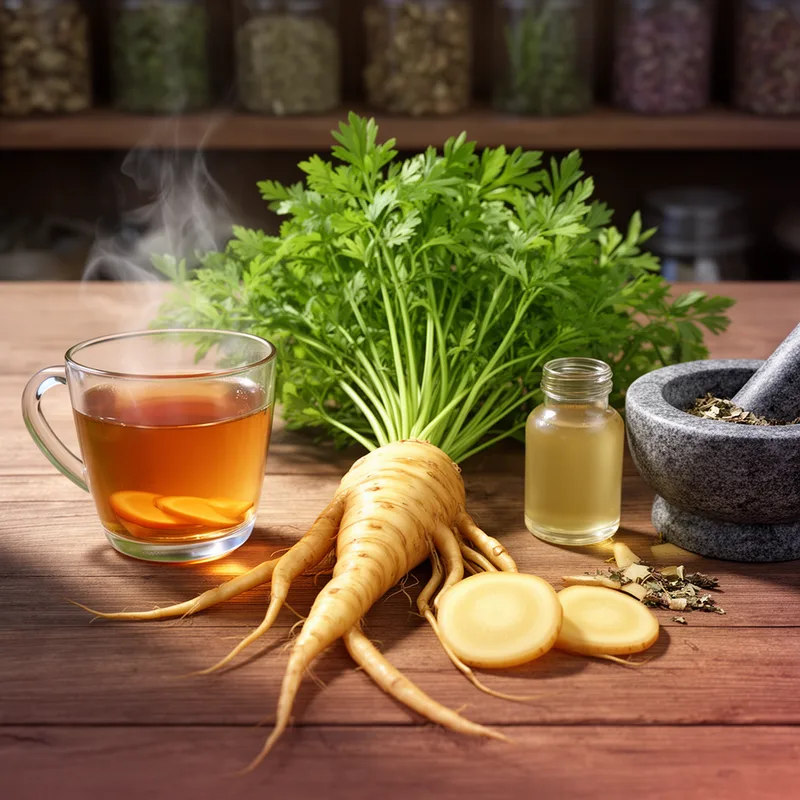
sweetroot
- noun
- /ˈswitˌrut/
- The herbalist recommended sweetroot for its natural sweetness in teas and remedies.
Examples
-
Many traditional recipes use sweetroot to add flavor without refined sugar.
-
She identified the wild plant as sweetroot by its distinctive aroma and taste.
-
I love the taste of sweetroot in my tea.
-
Have you ever tried sweetroot extract?
-
The herbalist recommended sweetroot for its natural sweetness in teas and remedies.
-
Many traditional recipes use sweetroot to add flavor without refined sugar.
-
She identified the wild plant as sweetroot by its distinctive aroma and taste.
Synonyms

 1
3.9
1
3.9

A plant root used to add a sweet, slightly bitter flavor to candies, drinks, and medicine

A plant with sweet roots that flavor food and help with coughs

A European garden herb with fern-like leaves, white flowers and a sweet aniseed taste
How Sweet

Surface Forms
Morphology
Etymology
Sweetroot comes from two plain English words: sweet ('pleasant and sugary') and root ('the part of a plant that grows under the ground'). It names plants like licorice whose root tastes sweet and is used for flavor or medicine, so the name tells you exactly what it is.