

to weather
 16
5.8
16
5.8

- verb
- /ˈwɛðər/
- Its limestone had not weathered well, and the day didn't do much to bring out its highlights.
- become weathered
- weathered soil
- weathered rock
Loading YouTube…
Watch on YouTubeBoth will not weather like wood will.
- Both will not weather like wood will.
- You don't see the weathering of those blocks in the same way that you see inside that you see in places like the Sphinx Temple.
Examples
-
The paint had been weathered away, giving the house a uniform gray look.
Academic text (2010) -
Brown spots, wrinkles, and white hair; he looked as weathered as the homes in Old Town.
Fiction book (1993) -
That is a metallic finish that is going to age and weather beautifully.
-
His appearance was that of someone slightly weathered, almost like a farmer coming home after hours in the field.
Fiction book (1996) -
His face looks as if it has weathered a bitter nor'easter.
Fiction book (1996) -
I see a weathered old farmhouse with a white picket fence.
-
Its camel-skin roof and sides were weathered; the rugs covering the sand floor were ordinary.
Academic text (1999) -
To either side, gray humps of weathered granite rose in cracked and sundered domes against the blue sky.
Fiction book (1992) -
The stone sculpture began to weather after years of heavy rain and wind.
-
The fence started to weather due to constant exposure to sunlight and rain.
Antonyms

Idioms











Phrasal Verbs



Compounds
 30
2.5
30
2.5
A United States government agency that gives weather forecasts and warnings
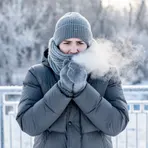
 24
1.9
24
1.9
The state of the air at a place and time, like temperature, wind, clouds, or rain


- Specialized
11
2.7
A place with instruments and people who measure and record the weather


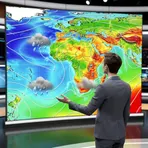

- Specialized
4
3.5
A satellite made by people that takes pictures and information about the Earth's weather


- Informal
2
5.6
A person who helps only when things are good and leaves during problems




- Specialized
1
6.4
Top outside part of a ship open to rain and wind that protects the area below

- Specialized
1
3.5
A thin piece of material placed around doors and windows to stop cold air, water or dust from entering
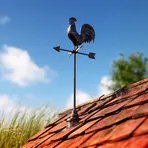


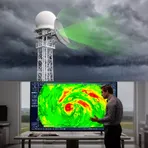





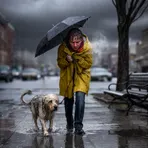


- Specialized
A map that shows weather in a place at one time, like wind and temperature


How Weathered

Surface Forms
Etymology
The verb weather (as in 'the wood weathered') comes from Old English weder, meaning 'storm' or 'air', and paints the picture of sun, rain, and wind slowly wearing something down. So when something is weathered it has changed in look or condition because of long exposure to the weather.