
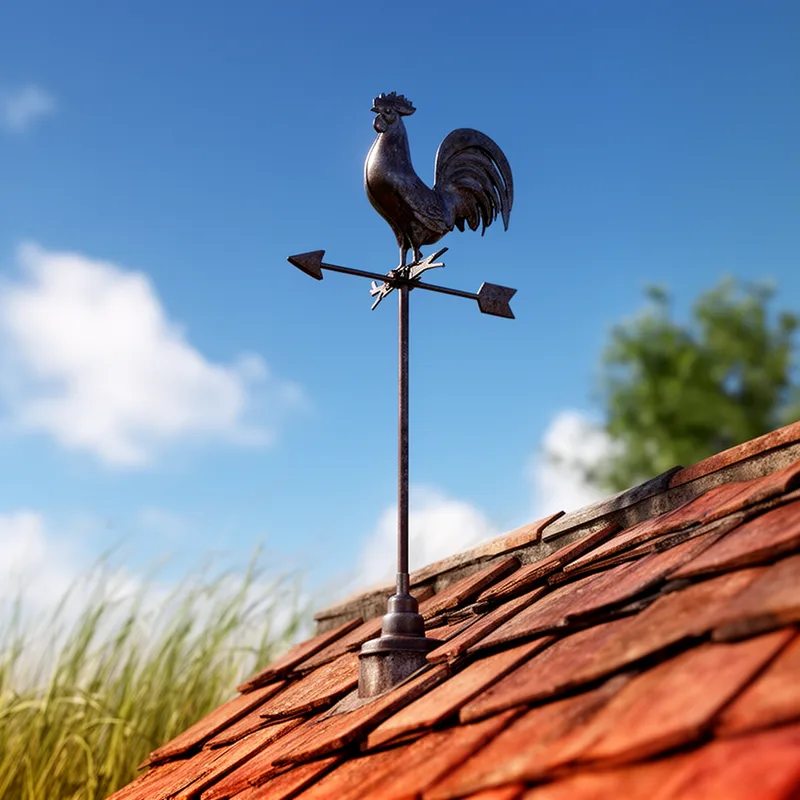
weather vane
 1
3.7
1
3.7

- noun
- /ˈwɛðər veɪn/
- As the storm approached, I watched the weather vane turn to show the wind's direction.
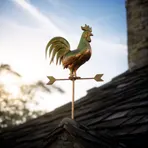
- weather vane shaped like a rooster
- iron weather vane
- copper weather vane
Examples
-
Behind the sign stood a white frame house with cupolas, a widow's walk, weather vanes, and lightning rods.
Fiction book (1993) -
I found that balloon twirling around my weather vane.
-
It's just the old weather vane.
-
A weather vane on the roof?
Academic text (2010) -
"I wonder, Harold," she said, not looking at me, but at the weather vane, "if we will remember years from now how we felt during these days."
Fiction book (1996) -
All he could see of the schoolhouse was the weather vane; the rest of it was buried beneath the weekend's snowfall.
Fiction book (1998) -
The weather vane, made from an overturned royal orb and scepter,
Academic text (1995) -
Their square, two-story house was devoid of ornamentation except for lightning rods and a cast iron weather vane.
Fiction book (1993) -
The weather vane on the barn indicated that the wind was coming from the north.
-
During the storm, the weather vane twisted wildly as the wind changed direction.
Synonyms
 3
6.5
3
6.5
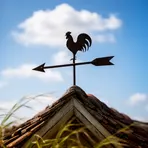
A flat metal shape on a roof that turns to show wind direction
 2
5.1
2
5.1
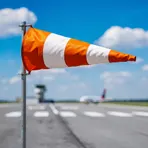
A cloth cone on a pole that shows wind direction and strength, often at airports
 1
5.6
1
5.6
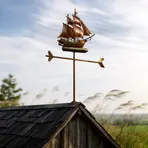
A thing on a roof that turns to show which way the wind blows
 1
7.7
1
7.7
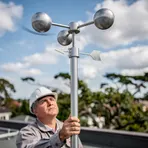
A tool that measures how fast the wind moves and which way it blows
 1
8.3
1
8.3
A metal rooster on a roof that shows which way the wind blows

A thing on a roof that turns to show which way the wind blows

A T-shaped post at an airfield that shows wind direction to pilots

A cloth cone on a pole that shows wind direction and strength

A tool that measures and records the speed and direction of the wind

A tool that shows how fast the wind blows and which way it comes from

A device that measures and records wind speed and direction
How Accurate

Surface Forms
Morphology
The meaning is directly derivable from its parts: a 'vane' is a plate that turns to show wind direction and 'weather' relates to atmospheric/wind conditions, so 'weather vane' naturally denotes an instrument that indicates wind direction. This is a common noun–noun composition found across languages and follows transparent compositional patterns, so a B1 learner who knows both constituents would readily understand it.
Etymology
Weather vane comes from a simple picture: a vane (a metal shape, often a rooster) sits on a roof and turns to point toward the wind. That's why the name means 'a device that shows which way the wind is blowing'.