
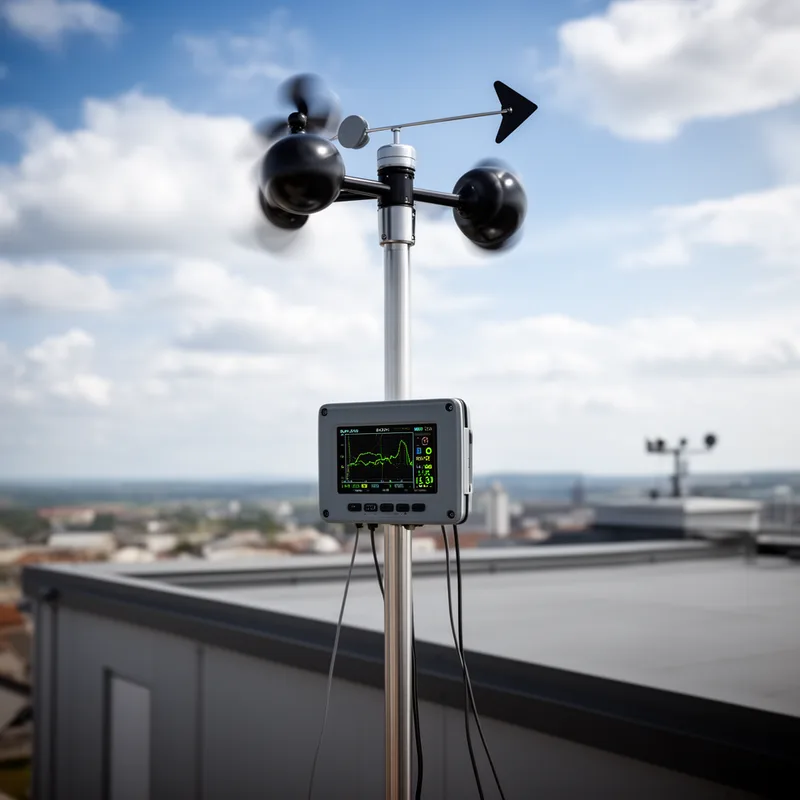
wind gage
- noun
- /wɪnd ɡeɪdʒ/
- Specialized
- The wind gage recorded a speed of 20 miles per hour.
Examples
-
The weather station technician calibrated the wind gage before the storm arrived.
-
A wind gauge is essential for meteorological studies.
-
By checking the wind gage, sailors could adjust their sails for optimal speed.
-
The new wind gage on the roof provides real-time data to the meteorology team.
-
The wind gage recorded a speed of 25 miles per hour during the storm last night.
-
Using a wind gage, the meteorologist measured the direction of the gusts coming from the north.
-
The sailor relied on the wind gage to determine the best time to set sail.
Synonyms
 1
7.7
1
7.7

A tool that measures how fast the wind moves and which way it blows

A tool that measures and records the speed and direction of the wind

A tool that shows how fast the wind blows and which way it comes from
Surface Forms
Morphology
The noun combines 'wind' (air movement) with 'gage' (a measuring instrument), so the meaning—an instrument that measures/records wind speed and direction—is directly compositional and predictable. This straightforward compounding pattern is cross-linguistically common (cf. 'wind gauge'/'anemometer') and would be readily understood by a B1 learner who knows both constituents.
Etymology
The compound noun wind gage comes from the plain image of wind and gage, where gage is an old spelling of 'gauge'. Early instruments had little cups or blades that turned in the breeze to show speed and direction, so the name came to mean 'an instrument that measures the wind'.