
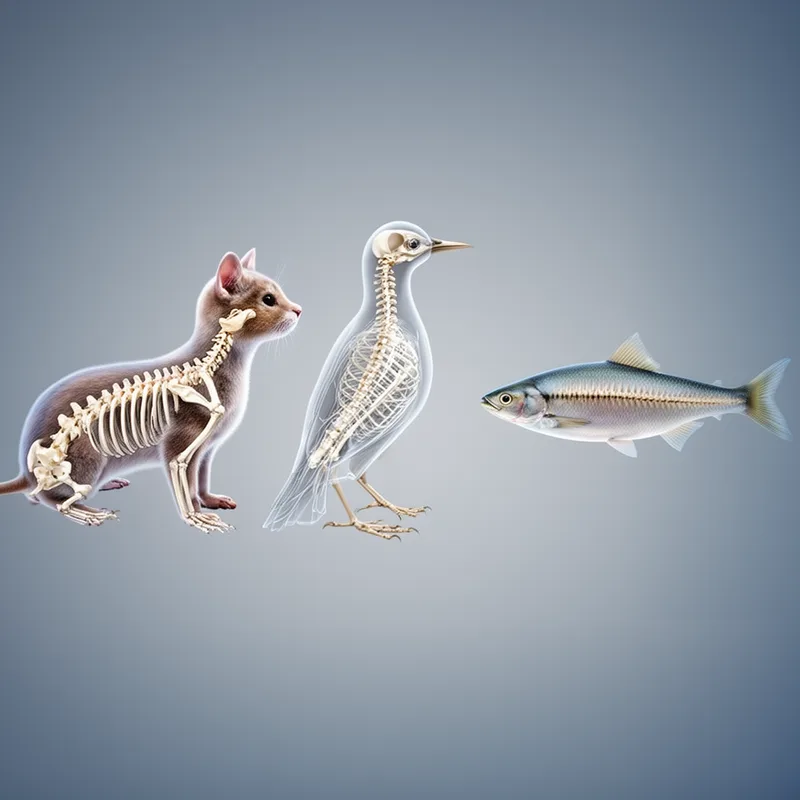
vertebrate
 1
4.1
1
4.1

- adjective
- /ˈvɜrtəbrɪt/
- Specialized
- Historically, three terms have been used to describe vertebrate reproductive modes: oviparity, ovoviviparity, and viviparity.
- vertebrate species
- vertebrate predator
- vertebrate predation
Examples
-
The feeding mechanism of snakes is one of the most specialized vertebrate musculoskeletal systems.
Academic text (2002) -
In only a few cases, usually involving vertebrate animals, have invaders been permanently eliminated.
Academic text (1996) -
Relationship between the number of managed populations and the probability of persistence for vertebrate species in Florida.
Academic text (2005) -
An integration of parasitology and vertebrate biology, however, can give us considerably more information.
Academic text (1996) -
Program topics included predators, raptors, snakes, habitat, vertebrate animal groups, and mammal skull identification.
Academic text (1999) -
CP surveys of freshwater species have primarily involved fish, whereas surveys of other vertebrate and invertebrate species are lacking.
Academic text (2011) -
Rhombomeres are quite different in structure from somites of the vertebral column; they represent a second system of vertebrate segmentation, however transient.
Academic text (1992) -
The streamlined genomes of birds will provide a simplified template with which to understand the determinants and evolution of vertebrate gene regulation.
Academic text (2008) -
The Forest Service had tried to achieve two conflicting goals: "viable populations" of vertebrate species and "high-level" timber production, but the federal court determined that national forest managers had not struck a lawful balance.
Academic text (2018) -
Many vertebrate animals, such as elephants and dolphins, display complex behaviors and social structures.
Synonyms

An animal that has a backbone
Antonyms
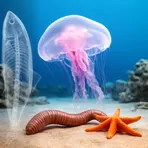
Compounds
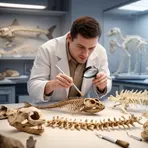
- Specialized

 1
7.9
1
7.9
The study of fossils of animals with backbones, like fish and mammals


- Specialized
The end part of an animal leg used for standing and for moving, like a human foot, hoof or claw
Surface Forms
Morphology
Etymology
Vertebrate as an adjective comes from the Latin vertebra meaning 'a joint' and vertere meaning 'to turn'. Because the spine is made of small joints that let an animal bend and turn, calling an animal vertebrate means it has a 'backbone'.