
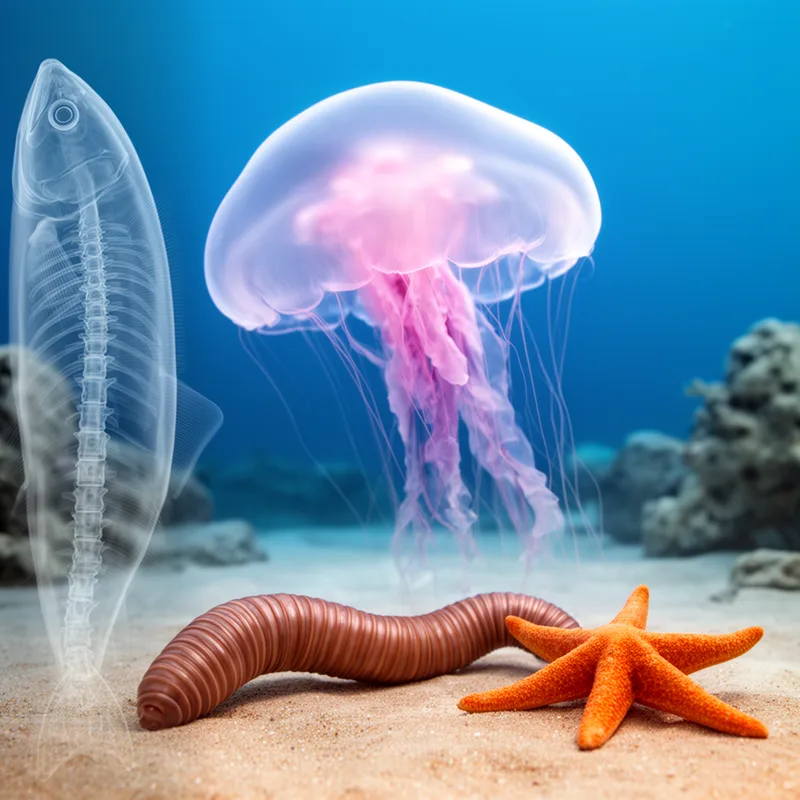
invertebrate
 1
4.6
1
4.6

- adjective
- /ɪnˈvɜrtəbrɪt/
- Specialized
- Such chemical effects may have contributed to complex changes (often declines) in invertebrate diversity (Smith et al. 1991).
- invertebrate species
- invertebrate assemblages
- invertebrate predator
Loading YouTube…
Watch on YouTubeThis has been proven in mice, hamsters, dogs, fish, invertebrate animals, and even in yeast.
- This has been proven in mice, hamsters, dogs, fish, invertebrate animals, and even in yeast.
- This technique has come to be called invertebrate derived DNA or IDNA.
Examples
-
Reefs also harbor some 800 reef-building coral species and innumerable other invertebrate species.
Academic text (2005) -
The garden was full of invertebrate life, including colorful butterflies and busy earthworms.
-
Are there any positive effects of disturbance on invertebrate diversity?
Academic text (2006) -
Therefore, many imaging techniques can be directly transferred to invertebrate systems.
Academic text (2004) -
The removal of these resources may have a greater influence than direct physical stress on invertebrate assemblages.
Academic text (2006) -
Fish community structure, in turn, affects benthic and pelagic invertebrate communities.
Academic text (1999) -
Similarly, how will invertebrate populations or communities respond to qualitative, directional changes in habitat?
Academic text (2002) -
Unsuitable soil habitats are characterized by low invertebrate diversity, or they may lack nematodes and other invertebrates entirely.
Academic text (1999) -
Fruit flies are another short-lived invertebrate organism useful for studying the genetic and molecular bases of aging and longevity.
Academic text (1992) -
Before the research trip, they learned about invertebrate species that inhabit freshwater environments.
Synonyms
 12
1.4
12
1.4
Having no bones
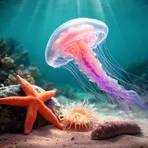
Relating to animals that do not have a backbone, like jellyfish or starfish
Antonyms

Compounds
- Specialized
A soft body part that animals without backbones use to move or hold on
Surface Forms
Morphology
invertebrate = vertebrate (transparent) = in + vertebrate
The adjective is a straightforward negative formation meaning 'not vertebrate' or 'lacking the defining property of vertebrates'.
Etymology
The word invertebrate comes from the parts in- ('not') and vertebra ('the small bones of the spine'), so it describes animals that are 'without a backbone'.