

vertebrate
 14
3.8
14
3.8

- noun
- /ˈvɜrtəˌbreɪt/
- Specialized
- All vertebrates possess a backbone, including animals like whales and eagles.
- vertebrate populations
- vertebrate species
- vertebrate skeleton
Loading YouTube…
Watch on YouTubeBut we have to remember that mammals are very special when it comes to breathing because we're the only class of vertebrates that have a diaphragm.
- But we have to remember that mammals are very special when it comes to breathing because we're the only class of vertebrates that have a diaphragm.
- And so we already have examples of vertebrates that have life spans far beyond anything that we humans can can muster.
- And the second book, Metazoa, it treats most, most animal groups, doesn't have tons on birds, but it has quite a lot on fish and other vertebrates.
- Then in these non mammalian vertebrates is really the main visual center.
- But the largest group of vertebrates was not even considered fish, fish.
Examples
-
All vertebrates have a liver, all vertebrates have lungs.
-
Furthermore, P is necessary for the formation and maintenance of bones and teeth in all vertebrates.
Academic text (2011) -
Then your chart will come down like this, to the next group, which is the vertebrate class of mammals.
-
I am in town for a conference on vertebrate paleontology.
Fiction book (2000) -
Every vertebrate needs iodine to survive, OK?
-
And those are the seven classes of vertebrates.
-
And it's not only in chickens, it's in all vertebrates, including humans.
-
By the time our vertebrate ancestors scrambled out of the mud, the atmosphere was ready for them.
Fiction book (1999) -
But we have to remember that mammals are very special when it comes to breathing because we're the only class of vertebrates that have a diaphragm.
-
Many dispersers of angiosperm fruits are large vertebrates whose populations are often vulnerable to human disturbances.
Academic text (1990)
Synonyms

Animals with a backbone like fish, birds, and mammals
Compounds
- Specialized

 1
7.9
1
7.9
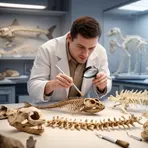
The study of fossils of animals with backbones, like fish and mammals


- Specialized
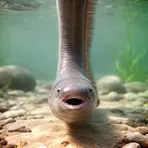
The end part of an animal leg used for standing and for moving, like a human foot, hoof or claw
How Complex

Surface Forms
Morphology
Etymology
Vertebrate comes from the Latin vertebra meaning 'a joint' and vertere meaning 'to turn'. Those small joints make up the spine that lets animals bend and turn, so a vertebrate is an animal 'with a backbone'.