

twelfth cranial nerve
- noun
- /twɛlfθ ˈkreɪniəl nɜrv/
- Specialized
- Damage to the twelfth cranial nerve can result in difficulty moving the tongue.
Examples
-
The twelfth cranial nerve is crucial for tongue movement.
-
Doctors often examine the twelfth cranial nerve during a neurological assessment.
-
Tests showed impairment of the patient's twelfth cranial nerve function after the accident.
-
The surgeon took care to avoid the twelfth cranial nerve during the operation.
-
Damage to the twelfth cranial nerve can result in difficulty moving the tongue.
-
The surgeon took care to avoid the twelfth cranial nerve during the operation.
-
Doctors often examine the twelfth cranial nerve during a neurological assessment.
Synonyms


 1
6.4
1
6.4
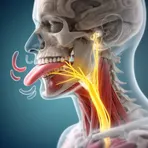
A nerve that controls most movements of the tongue

A nerve that controls tongue movement

A nerve that controls the muscles of the tongue
Surface Forms
Morphology
The phrase literally combines '12th' (ordinal) + 'cranial' (of the skull) + 'nerve' (nerve), so it denotes the twelfth nerve associated with the cranium; this meaning is directly derivable from the constituents. Such ordinal–anatomical naming is a regular, cross-linguistic convention in medical terminology, so a B1 learner who knows the component words will understand it refers to the twelfth cranial nerve (even if they do not know its specific function).
Etymology
Twelfth cranial nerve is the name for the nerve that is number twelfth and comes from the skull, so cranial means 'from the skull'. Picture a thin cord running from the brain to the 'tongue' muscles; because this nerve makes the tongue move, the name tells you it controls tongue 'movement'.