
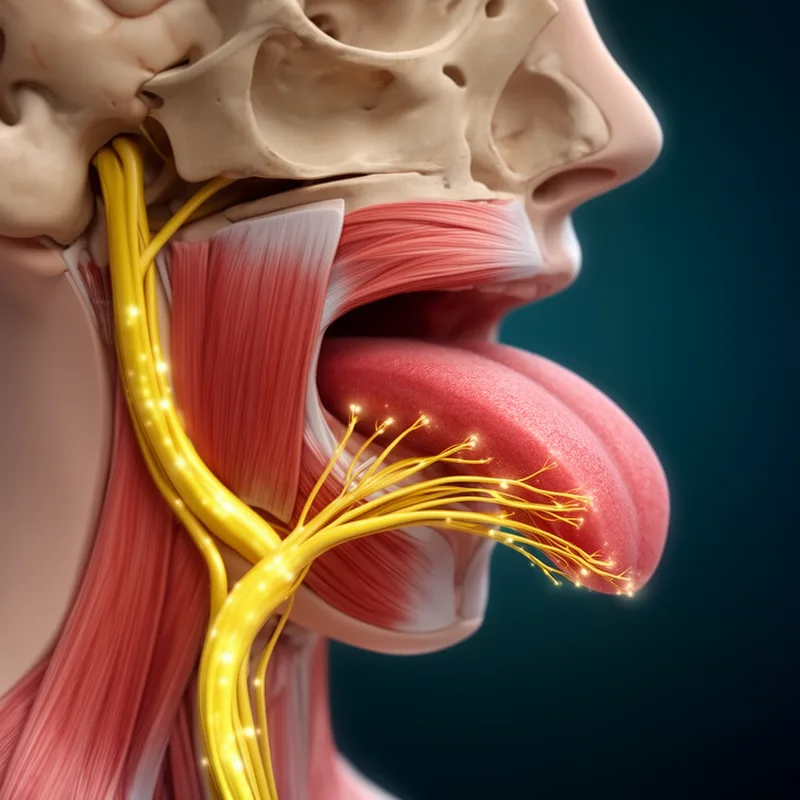
nervus hypoglosus
- noun
- /ˈnɜrvəs ˌhaɪpəˈɡloʊsəs/
- Specialized
- In anatomy, the nervus hypoglosus is the twelfth cranial nerve.
Examples
-
The nervus hypoglosus plays a crucial role in speech and swallowing.
-
During surgery, care must be taken not to injure the nervus hypoglosus.
-
Damage to the nervus hypoglosus can cause weakness in tongue movement.
-
The nervus hypoglosus is crucial for tongue movement.
-
Damage to the nervus hypoglosus can cause weakness in tongue movement.
-
The nervus hypoglosus plays a crucial role in speech and swallowing.
-
During surgery, care must be taken not to injure the nervus hypoglosus.
Synonyms



 1
6.4
1
6.4
A nerve that controls most movements of the tongue

A nerve that controls the muscles of the tongue

A nerve that controls tongue movement
Surface Forms
Morphology
nervus + hypoglosus
The form is directly compositional: Latin nervus = 'nerve' plus hypoglosus (hypo- 'under' + glos(sus) 'tongue'), so the phrase literally denotes the 'nerve under the tongue' that supplies tongue muscles. This is a technical Latinized formation, so its meaning is transparent to a learner who knows the constituent classical roots, though it relies on morphological knowledge of hypo-/gloss-.
Etymology
Nervus hypoglosus comes from old Latin and Greek words: nervus means 'nerve' and hypoglosus means 'under the tongue'. So the name gives a clear picture — it is the nerve under the tongue that controls the tongue's movements, which explains its role in speech and swallowing.