

trigeminal
- noun
- /traɪˈdʒɛmɪnəl/
- Specialized
- After the injury, she experienced pain in the area served by the trigeminal nerve.
Examples
-
Two exceptions were tumors of the trigeminal (n6) and optic (n14) nerves; in one case, (n15) the exact location was unreported.
Academic text (2004) -
The trigeminal nerve transmits sensations from the face to the brain.
-
Here's the trigeminal ganglion coming from the face.
-
First of all, the dorsal lateral placodes include the trigeminal placode, OK.
-
The doctor explained that the trigeminal nerve controls both feeling in the face and movements for chewing.
Synonyms
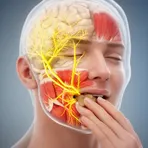
A nerve in the face that carries feeling and controls chewing muscles

A main nerve in the face that carries feeling and controls chewing muscles
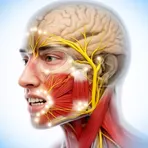
A large nerve in the face that sends touch signals and controls chewing muscles

The main nerve in the face that feels touch and controls chewing
Compounds

- Specialized


 1
7.5
1
7.5
A sudden, very strong, sharp pain in one side of the face caused by a nerve problem
- Specialized
A nerve in the face that carries feeling and controls chewing muscles
Surface Forms
Morphology
trigeminal = trigeminal (opaque) = tri + gemin + al
In medical usage, the noun is an understandable substantivized use of the adjective 'trigeminal', but it depends on the omitted noun 'nerve'.
Etymology
Trigeminal comes from the Latin parts tri- ('three') and geminus ('twin'), because the trigeminal nerve divides into three main branches across the face. So think of trigeminal as the 'three-part' nerve that gives feeling to the face and helps with chewing.