
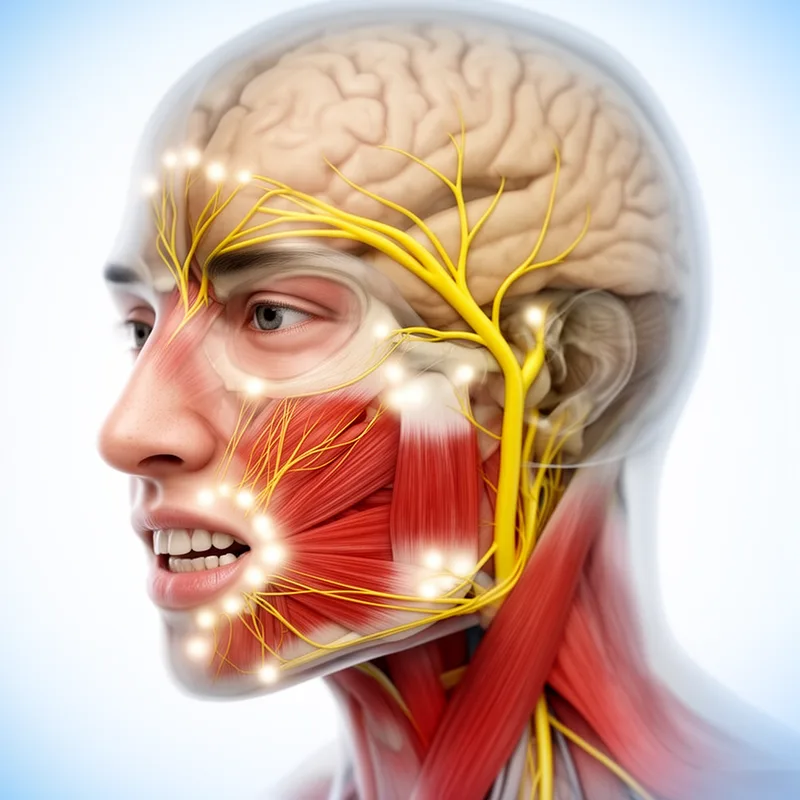
nervus trigeminus
- noun
- /ˈnɜrvəs traɪˈdʒɛmɪnəs/
- Specialized
- The nervus trigeminus plays a crucial role in transmitting facial sensations to the brain.
Examples
-
The dentist explained that anesthesia would temporarily numb the nervus trigeminus.
-
Damage to the nervus trigeminus can lead to a sudden onset of facial pain.
-
The nervus trigeminus is crucial for facial sensation.
-
A problem with the nervus trigeminus can lead to severe pain.
-
Damage to the nervus trigeminus can lead to a sudden onset of facial pain.
-
The nervus trigeminus plays a crucial role in transmitting facial sensations to the brain.
-
A problem with the nervus trigeminus can lead to severe pain.
Synonyms

The main nerve in the face that feels touch and controls chewing
A nerve in the face that carries feeling and controls chewing muscles

A nerve in the head that carries feeling from the face and controls biting and chewing
A main nerve in the face that carries feeling and controls chewing muscles
Surface Forms
Morphology
This is a regular anatomical Latin binomial: 'nervus' = nerve and 'trigeminus' = trigeminal/three‑branched, so the compound directly names the trigeminal nerve (the main sensory face nerve and motor for chewing). Latin anatomical naming maps transparently onto English 'trigeminal nerve', so a learner who knows both constituents can infer the meaning.
Etymology
Nervus trigeminus comes from Latin: nervus means 'nerve' and trigeminus comes from parts meaning 'three' and 'twin', so it pictures a nerve that splits into three main branches. That's why the name fits the large face nerve that gives feeling to the face and helps with chewing.

