

thrombolytic agent
- noun
- /ˌθrɒm.bəˈlɪt.ɪk ˈeɪ.dʒənt/
- Specialized
- The paramedics were trained to administer thrombolytic agents if they suspected a stroke in the patient.
Examples
-
Doctors often use thrombolytic agents to help dissolve blood clots quickly during a heart attack.
-
The development of new thrombolytic agents, new drug combinations, and new methods of administration could create a window of opportunity to enhance the quality of regional perfusion and to reduce side effects in acute cerebral infarction.
Academic text (1995) -
During the emergency, the team decided that using thrombolytic agents was necessary to restore blood flow to the brain.
Synonyms

 1
8.4
1
8.4

A medicine made by bacteria that breaks up blood clots
 1
3.8
1
3.8
A medicine that breaks up blood clots that block blood flow, often in the heart


 1
7.7
1
7.7
A medicine that dissolves blood clots to treat heart attacks and strokes
 1
7.7
1
7.7
A medical treatment that breaks down blood clots in blood vessels

A drug that breaks up blood clots to open blocked blood vessels
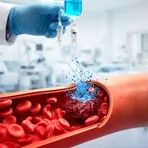
A medicine that helps break up blood clots

A medicine that breaks up blood clots to treat heart attacks and strokes

A substance the body makes that dissolves blood clots

A protein in the blood that breaks down blood clots

Use medicine to break up blood clots that cause heart attack or stroke
Surface Forms
Morphology
Given the constituent meanings — 'thrombolytic' (a medication that dissolves blood clots) and 'agent' (a substance that produces an effect) — a learner who knows both words can directly compose the meaning 'a substance/drug that dissolves clots.' This is a straightforward biomedical noun–noun combination following regular composition patterns (and similar constructions exist cross-linguistically), so the meaning is predictable from its parts.
Etymology
Thrombolytic agent comes from parts that tell the story: thrombo- means 'clot' and -lytic means 'to break', while agent shows it is a drug. So the name literally shows a medicine that 'breaks' or 'dissolves' a blood 'clot', which is why it means a drug used to open blocked blood flow.