
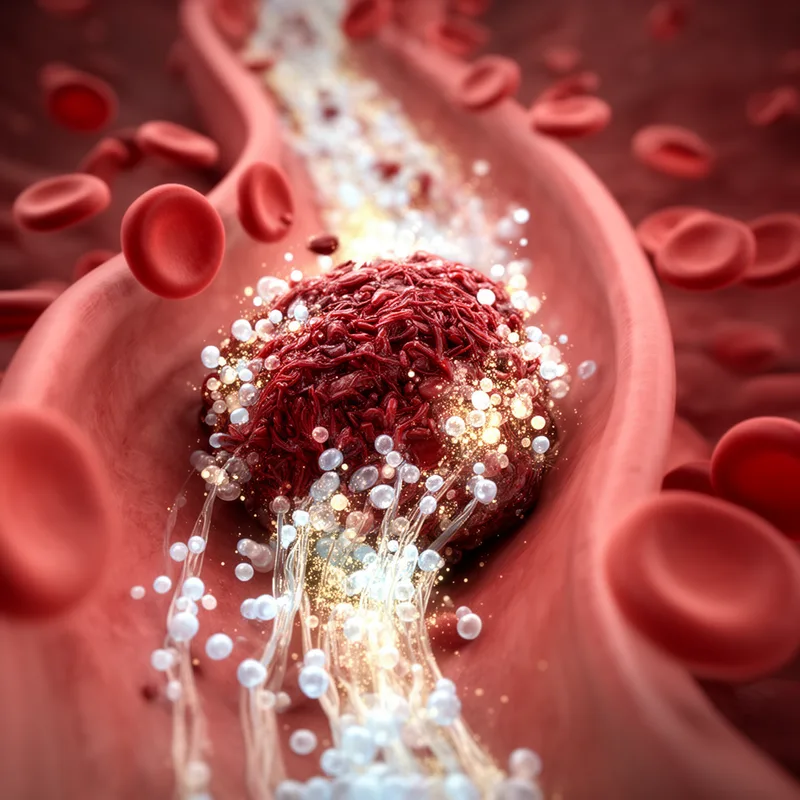
fibrinolysin
- noun
- /ˌfaɪbrɪˈnoʊlɪsɪn/
- Specialized
- Doctors studied the activity of fibrinolysin in patients recovering from surgery.
Examples
-
The body produces fibrinolysin to help dissolve unnecessary blood clots after healing.
-
A deficiency in fibrinolysin can result in an increased risk of thrombosis.
-
The body produces fibrinolysin to help dissolve clots.
-
Doctors often use fibrinolysin in treating heart attacks.
-
Fibrinolysin is critical in the process of dissolving fibrin to help restore normal blood flow after an injury.
-
Doctors use fibrinolysin to break down blood clots in patients suffering from certain types of heart attacks.
-
An increase in fibrinolysin levels can aid in the swift recovery of patients who have undergone surgical procedures.
Synonyms


 1
9.9
1
9.9
A natural protein made in the kidneys that helps break down blood clots

A protein in the blood that breaks down blood clots
A medicine that helps break up blood clots

A drug that breaks up blood clots to restore blood flow during a heart attack or stroke

A substance made by the body that helps break down blood clots
Surface Forms
Morphology
Etymology
Fibrinolysin comes from fibrin (a word meaning 'fiber' or 'thread') and lysin (from a root meaning 'to loosen' or 'break down', as in analysis). So, fibrinolysin is a substance that 'breaks down' the fibrous material that holds a blood clot, which is why it helps dissolve clots.