
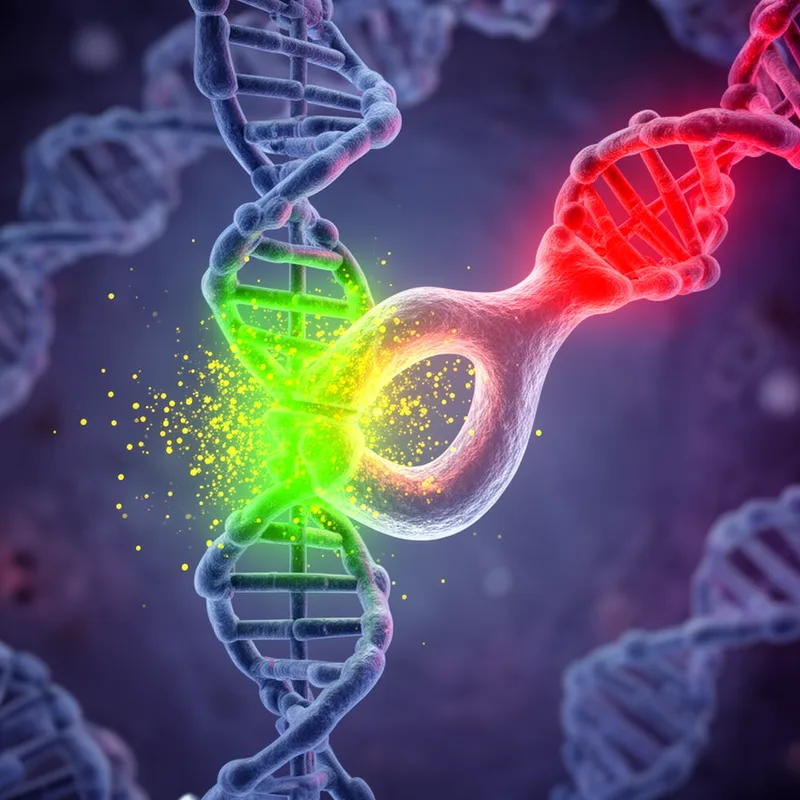
suppresser gene
- noun
- /səˈprɛsər dʒin/
- Specialized
- A suppresser gene can inhibit the effects of a mutant gene.
Examples
-
The presence of a suppresser gene can sometimes neutralize the effects of a harmful mutation.
-
Researchers are studying how the suppresser gene interacts with oncogenes in tumor formation.
-
A mutation in a suppresser gene can lead to unchecked cell growth and possibly cancer.
-
The suppresser gene plays a critical role in gene regulation.
-
A mutation in a suppresser gene can lead to unchecked cell growth and possibly cancer.
-
Researchers are studying how the suppresser gene interacts with oncogenes to prevent tumor formation.
-
The presence of a suppresser gene can neutralize the effects of a harmful mutation in the DNA.
Synonyms

 4
8.8
4
8.8

A gene that reduces the effects of another gene, often a harmful change
 1
9.0
1
9.0
A substance, gene, or protein that attaches to DNA to stop a gene from working
 1
5.6
1
5.6
A gene that reduces the effect of a harmful mutated gene

A gene that stops another gene from showing its effect
A gene that makes a protein that stops other genes from turning on

A gene that hides the effect of another gene so a trait does not appear
How Suppressive
- Specialized

- Specialized
1
5.6
Surface Forms
Morphology
The meaning 'a gene that suppresses the expression of another gene' is directly and compositionally derived from 'suppresser' (one that suppresses) + 'gene' (a DNA unit), following regular noun-noun compounding. Although it is technical vocabulary, the semantic relation is transparent and a B1 learner who knows both constituents should be able to infer the MWE's meaning.
Etymology
The noun suppresser gene comes from the idea of a suppresser that presses down or stops something and gene meaning a part of a cell. Imagine something that keeps another gene quiet or 'off', so it means a gene that reduces or prevents another gene's action.