
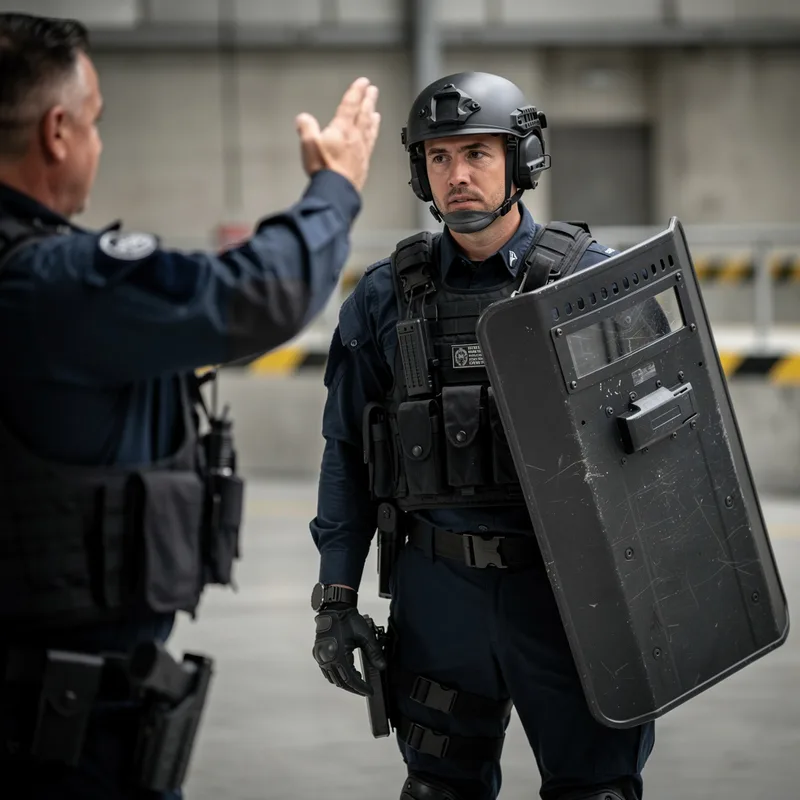
to stand down
 123
5.1
123
5.1

- phrasal verb
- /stænd daʊn/
- After the emergency was resolved, the firefighters were told to stand down and return to the station.
- ordered to stand down
- told to stand down
- he said, 'stand down'
Loading YouTube…
Watch on YouTubeAnd then barely a week later, Biden stands down.
- And then barely a week later, Biden stands down.
- Anyway, people didn't buy that Kissinger and eventually he had to stand down.
- The the attorney general and the president can tell AUS attorney to stand down.
- Or we get told by the president to stand down or return to base, which is like base.
- So that's the kind of power that Epstein was tapped into, that AUS attorney could be told to stand down.
- And then you're like, I and then they're saying we told you to stand down.
- It looks like Pence is ordering these people to stand down and to leave the, the Capitol building and to and to act responsibly.
- And bearing in mind, look, even Biden wins and then, you know, maybe after a year or two, he stands down, down through ill health.
- He ordered them to stand down, so they locked themselves inside their police station and were literally forbidden to intervene.
- Somebody brings me back into the talk and it's the Bagram and they say stand down on your infill.
- Then he was coming up with all I saved, you know, I fetched her back and all this and he stood down.
Examples
-
I need you to stand down tonight.
-
When the security team asked permission to go, they were repeatedly told to "Stand down."
Blog text (10) -
So knowing when to stand down, it's an important part of leadership.
-
Or we get told by the president to stand down or return to base, which is like base.
-
Go ahead and stand down.
-
Will you please stand down?
-
l gave you a direct order to stand down, sergeant.
-
Iran appears to be standing down, which is a good thing for all parties concerned and a very good thing for the world.
-
For all the years that we were told to stand down and to stand by... ...you're doing the right thing.
-
You may stand down.
Synonyms
 ∞
1.0
∞
1.0
To go away from a place, person, or group
 788
1.2
788
1.2
To leave a job or position
 533
3.7
533
3.7
Leave a job or office by giving notice
 356
2.8
356
2.8
Move away from someone, or stop taking part in something
 206
3.4
206
3.4
To stop being involved in an activity or agreement
 148
3.3
148
3.3
Give up an important job so someone else can take over
 129
3.4
129
3.4
Move out of the way or leave a job so someone else can take it
 107
3.7
107
3.7
To stop insisting because others oppose you
 79
3.4
79
3.4
Decide not to do something you promised to do
 79
3.2
79
3.2
Leave an activity or agreement you had joined
 69
6.3
69
6.3
To give up a right, belief, job, or position officially
 59
3.9
59
3.9
Stop supporting or taking part in a plan because you feel unsure
 53
4.2
53
4.2
Stop being a leader with official power, for example a government official or company boss
 37
3.5
37
3.5
To leave a place suddenly to show you are angry or upset
 23
8.0
23
8.0
To give up a position of power, for example a king or queen
 20
4.9
20
4.9
To stop doing a job or role politely
 1
8.4
1
8.4
To officially take back a promise or plan
 1
7.4
1
7.4
Give something to another person because you are forced to do so

To withdraw from a promise or agreement, often officially under pressure

Take back a promise or support you gave

To stop working after a long time
Antonyms


How Withdrawn
874
2.0

- Formal
533
3.7
123
5.1
129
3.4
101
3.6
Surface Forms
Morphology
The sense 'to withdraw from a position or duty' is related to the constituents because 'down' often signals a reduction/cessation added to 'stand', so a learner could guess a loss or lowering of readiness. However, the specific institutional sense of relinquishing a role or being ordered to stop is not fully predictable from the literal meanings and varies cross-linguistically, so it would likely require prior exposure.
Etymology
The phrasal verb stand down comes from military orders telling soldiers to stop standing ready and move to a lower, safer place. The idea is to stand down from duty, so today it means 'to withdraw' or 'to stop taking action'.