

to sense
 629
4.2
629
4.2

- verb
- /sɛns/
- Being constantly among them meant I could sense the potential danger in most situations.
- able to sense
- begin to sense
- seem to sense
Loading YouTube…
Watch on YouTubeThey hear too much, they see too much, they sense too much.
- They hear too much, they see too much, they sense too much.
- And beetles can apparently sense trees that are stressed by drought.
- Life has evolved senses to sense things that were never before sensed.
- When you're sitting with them, you can still sense that there is a connection.
- And he tells us that they sense their failure.
- You have sensors in your gut that sense how full or empty your gut is.
- Yeah, I could sense that you get frustrated with them.
- However, you do kind of sense that.
- Another strange thing that happens when you can sense the essence of who you are.
Examples
-
When you're sitting with them, you can still sense that there is a connection.
-
I can sense it and so can you.
-
For the first time in a long time, I could sense hope.
-
Did you sense that I liked you?
-
I hear footsteps on the stairs and can sense someone standing at the doorway.
Fiction book (1990) -
Without being able to explain it, we sensed her admission of something she would still deny.
Fiction book (1990) -
Apparently, the penguins sensed they were in danger and found more stable sea ice.
Academic text (2008) -
The dog can sense the changes in the weather before a storm.
-
He could sense the tension in the room as they waited for the announcement.
-
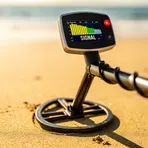
The scientist used instruments to sense the subtle movements in the experiment.
Synonyms
 ∞
1.0
∞
1.0
To notice an emotion or a physical sensation in your body
 ∞
1.0
∞
1.0
To see or become aware of something
 763
3.2
763
3.2
Find something that is hard to notice
 83
3.7
83
3.7
To notice something with your senses, especially sight or hearing
 70
5.8
70
5.8
To notice something that is hard to see or hear
 8
7.5
8
7.5
To know something quickly without thinking about it
Antonyms


Idioms


Phrasal Verbs


- Offensive
5
8.1
To make someone start thinking and behaving reasonably, often by scolding or force
Compounds







 17
7.6
17
7.6
A natural feeling that tells you things without using sight, hearing, touch, smell, or taste


 12
3.0
12
3.0
A proud, satisfied feeling you get after finishing something difficult



 7
3.8
7
3.8
An understanding of what is right and wrong that guides a person's actions









- Specialized
1
9.9
A simple immediate experience from seeing, hearing, or touching before the mind interprets it







- Specialized
A sense that tells you where your head is and how it moves from the inner ear


- Specialized
Ability to feel where your body parts are and how they move without looking






- Specialized
Parts of the inner ear that tell you your head position and keep you balanced







- Specialized
A sensor on a machine that detects light, sound, distance or temperature


- Specialized
The ability to feel touch, pain, temperature, body position, and internal organs

- Specialized
Parts of the inner ear that tell your body about balance and movement

How Clearly
70
5.8
 763
3.2
629
4.2
763
3.2
629
4.2
- US
∞
1.4
83
3.7
∞
1.0
Surface Forms
Etymology
The word sense comes from the Latin sentire, 'to feel'. To sense something is to 'feel' or notice it—by your body, by a gut feeling, or with a device—so the verb keeps the idea of becoming aware.