

labyrinthine sense
- noun
- /ˌlæbəˈrɪnˌθin sɛns/
- Specialized
- Our labyrinthine sense helps us maintain our balance while walking or running.
Examples
-
The labyrinthine sense is crucial for coordinating head and eye movements.
-
Disorders affecting the labyrinthine sense can result in vertigo and dizziness.
-
The labyrinthine sense helps us maintain balance.
-
Many animals rely on their labyrinthine senses for navigation.
-
Disorders affecting the labyrinthine sense can result in vertigo and dizziness.
-
Our labyrinthine sense helps us maintain our balance while walking or running.
-
The labyrinthine sense is crucial for coordinating head and eye movements.
Synonyms

 7
7.2
7
7.2

The sense of balance in the inner ear that tells you head position and movement
 4
3.4
4
3.4
The ability to keep your body steady so you do not fall


 1
6.3
1
6.3
Parts of the inner ear that help you keep your balance and know your body's position

Parts of the inner ear that tell your body about balance and movement

Parts of the inner ear that tell you your head position and keep you balanced
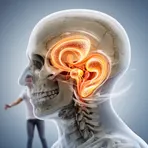
Parts in the inner ear that help keep balance and show where your head is
Surface Forms
Morphology
The phrase is a straightforward adjective + noun composition: 'labyrinthine' (relating to the inner ear labyrinth) modifies 'sense' (a sensory faculty), so together they denote the inner‑ear sense that detects head position and movement. Although somewhat technical, the meaning is directly predictable from the constituent words and follows normal compositional semantics, so a learner who knows both words will understand it.
Etymology
Labyrinthine sense comes from the inner ear's tiny labyrinth, a maze of narrow tubes. The little maze holds tiny sensors that tell the brain where the head is and how it moves, so the phrase refers to the body's system for 'balance'.