
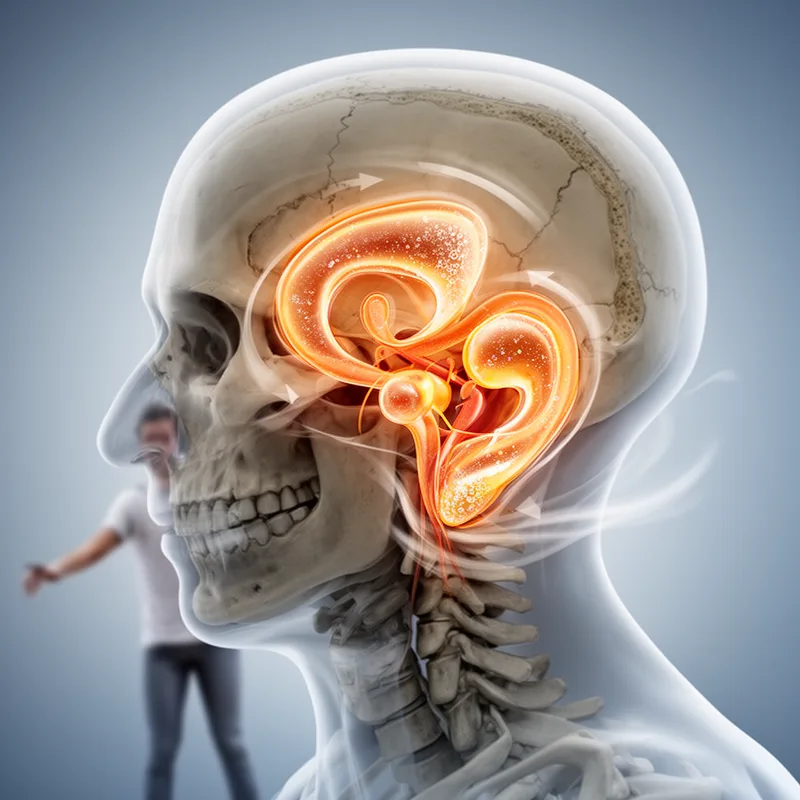
vestibular apparatus
- noun
- /vɛˈstɪbjələr əˈpærətəs/
- Specialized
- The vestibular apparatus is crucial for our spatial orientation during movement.
Examples
-
Disorders of the vestibular apparatus can lead to dizziness and vertigo.
-
A separate source of increased sensory input is inappropriate stimulation of the vestibular apparatus and the gut (figure 1).
Academic text (2003) -
The vestibular apparatus helps humans maintain their balance while walking.
Synonyms


 1
6.3
1
6.3
Parts of the inner ear that help you keep your balance and know your body's position
Surface Forms
Morphology
The noun phrase combines 'vestibular' (relating to the inner ear/balance) with 'apparatus' (a system or set of organs), so the overall meaning — a bodily system in the inner ear responsible for balance — is directly derivable from the parts. Although technical vocabulary, the composition is regular and mirrored in many languages (e.g., Spanish 'aparato vestibular'), so a learner who knows both constituents would understand it.
Etymology
Vestibular apparatus comes from a word for a small 'entrance' called vestibule and from apparatus meaning a set of parts, so imagine a tiny room in your inner ear full of little sensors. These sensors move when your head turns and tell your brain which way is up, so the phrase means the ear parts that control balance.