
sense organ
- noun
- /sɛns ˈɔrɡən/
- Specialized
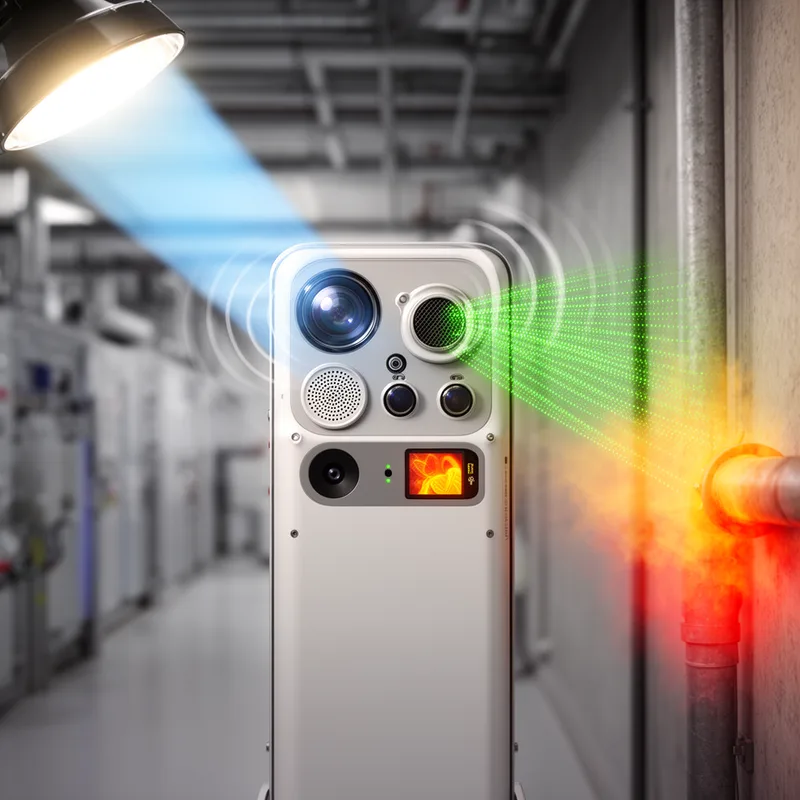
- The autonomous drone relies on cameras and LiDAR as its sense organ.
Examples
-
Engineers fitted the inspection robot with a thermal sense organ to find heat loss in pipes.
-
In the lecture, she compared the rover's radar to a biological sense organ.
-
The robot's sense organ can detect temperature changes.
-
Many sense organs are used in modern robotics.
-
The autonomous drone relies on cameras and LiDAR as its sense organ.
-
Engineers fitted the inspection robot with a thermal sense organ to find heat loss in pipes.
-
In the lecture, she compared the rover's radar system to a biological sense organ.
Synonyms

 1
5.8
1
5.8

A body part that senses touch, light, or sound and sends signals to the brain
How Advanced
- Specialized
152
6.9

- Specialized
898
3.4
- Specialized
189
3.5
- Specialized
Surface Forms
Morphology
The meaning is directly compositional: combining 'sense' (a faculty for sensing) with 'organ' (a part that performs a function) yields 'an organ for sensing', which a B1 learner who knows both words can readily infer. The technical extension to artificial sensors in robotics is a predictable analogy of biological sense organs and is cross-linguistically common, so the expression is transparent.
Etymology
The term sense organ is also used for machine sensors because people compared a machine part to a body's sense, meaning 'to notice', and organ, meaning a working part. For example, a camera is like an eye, so engineers call cameras and other sensors a machine's sense organs, meaning the parts that let the machine 'notice' its surroundings.