

sea holm
- noun
- The twisted spiny leaves of sea holm make it easy to spot among other dune plants.
Examples
-
You can find sea holm growing along sandy beaches in certain coastal regions.
-
The roots of sea holm were once prized for their supposed aphrodisiac properties.
-
The sea holm thrives along the sandy beaches.
-
Many gardeners appreciate the sea holm for its unique appearance.
-
The twisted spiny leaves of sea holm make it a distinctive sight along the dunes.
-
You can find sea holm growing in the sandy soil near coastal areas.
-
Many gardeners choose sea holm for its hardy nature and unique foliage.
Synonyms

A plant with spiky blue-green leaves that grows on sandy coasts
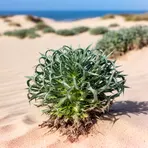
A coastal evergreen plant with twisted spiny leaves that grows on sand dunes

A plant with spiny leaves and blue flowers often grown in gardens

A prickly plant with blue or purple flowers often called sea holly

A spiky plant with thistle-like flowers often used in gardens and flower arrangements
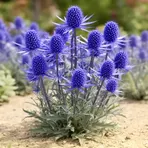
A group of flowering plants called sea hollies with thistle-like blue flower heads
Surface Forms
Morphology
The lexical parts 'sea' (large body of saltwater) and 'holm' (small islet) would lead a B1 learner to expect a place-feature (an islet by the sea) rather than a species of plant. 'Sea holm' is a specialized, partly archaic botanical name whose meaning as an evergreen eryngo cannot be predicted from the constituents, so learners would need prior exposure.
Etymology
Sea holm gets its name from where it grows and how it looks: sea because it lives on sandy shores, and holm because the round, spiny plant looks like a small, tough 'island' in the sand. So the name helps you remember it is a salty, spiky coastal plant.

