

sea holly
- noun
- /siː ˈhɑːli/
- sea holly zone
Examples
-
They crossed the narrow width of the island and looked down a far more precipitous slope of sand dunes, anchored with beach grass, sea holly, and sea kale.
Fiction book (1990) -
The sea holly is known for its spiky leaves and vibrant blue flowers, making it a popular choice for gardens.
-
Many gardeners choose to plant sea holly because it adds a unique texture and color to landscape designs.
-
During the summer, the sea holly showcases its striking, prickly blooms, attracting various pollinators to the garden.
Synonyms

A plant with spiky blue-green leaves that grows on sandy coasts

A spiky plant with twisted leaves that stays green and grows on sandy beaches

A prickly plant with blue or purple flowers often called sea holly
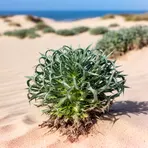
A coastal evergreen plant with twisted spiny leaves that grows on sand dunes

A spiky plant with thistle-like flowers often used in gardens and flower arrangements
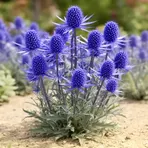
A group of flowering plants called sea hollies with thistle-like blue flower heads
How Spiky

Surface Forms
Morphology
sea + holly
The compound combines 'sea' (coastal) with 'holly' (a prickly evergreen plant), so a learner who knows both words can infer it refers to a holly-like plant associated with the sea; this is a straightforward noun-modifier composition. Detailed botanical distinctions (e.g. not a true holly) may be unknown, but the general meaning is directly derivable from the constituents.
Etymology
Sea holly is named for how it looks and where it grows: its sharp, spiky leaves look like holly and it often grows by the sea. That's why the name helps you remember it's a spiky plant that grows by the sea and is often grown in gardens.

