
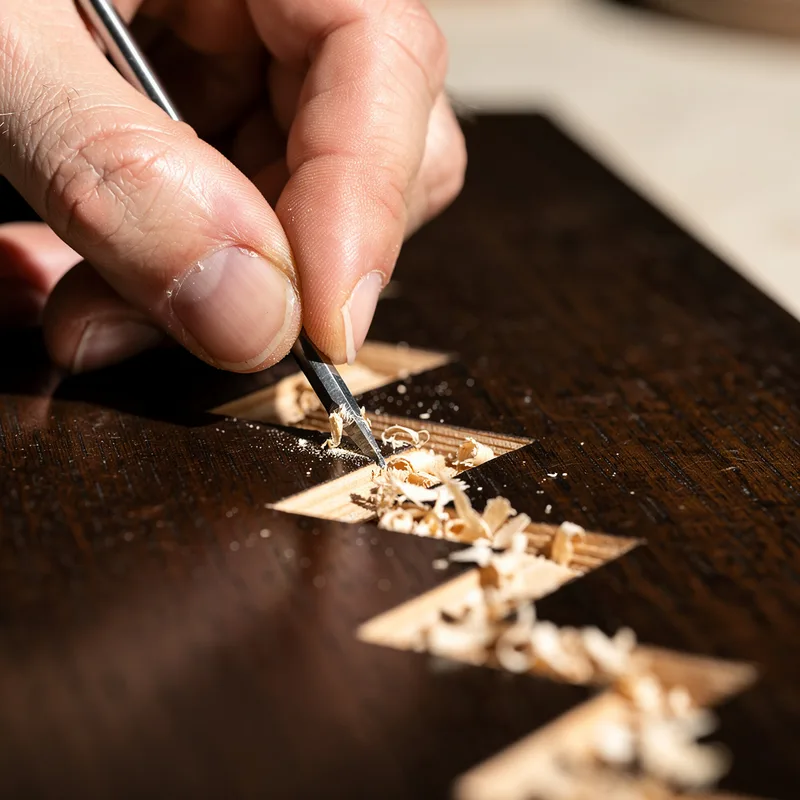
to scrape
 37
3.2
37
3.2

- verb
- /skreɪp/
- I won't have it; I don't agree." Emile ignored him and began scraping around the vent.
Loading YouTube…
Watch on YouTubeYou which you scrape a pattern in the mud and use cow dung to.
- You which you scrape a pattern in the mud and use cow dung to.
Examples
-
Then, with both hands holding the wooden handle, she scrapes the cowhide in long strokes, using a "pull" motion.
Academic text (2002) -
You scrape shavings off it with a stick that was split to give it a sharp edge.
-
Using a "push" motion away from her body, Sokate scrapes a goat hide.
Academic text (2002) -
The door had sagged on its hinges; it scraped along the floor as she pushed against its weight.
Fiction book (1992) -
The animals gnaw through the growth's outer layer and scrape out the spongy, odorific material inside.
Academic text (1993) -
The unseen madman noses forward, veering sharply over the double yellow line, scraping sides with the truck.
Fiction book (1995) -
Using a sharp knife, scrape the kernels from the cob and set them aside.
-
After cooking, be sure to scrape the browned bits from the bottom of the pan for extra flavor.
-
To clean the pot, carefully scrape off any stuck-on food with a wooden spoon.
Synonyms
 161
1.1
161
1.1
To cut or mark a surface by scraping it with something sharp
 47
5.2
47
5.2
To cut words and pictures into a hard surface like metal or wood
 18
5.5
18
5.5
To cut a design into metal or glass with a sharp tool
 8
4.3
8
4.3
Make a harsh scraping sound by rubbing things together
 6
2.1
6
2.1
To touch or move across a surface leaving a small scratch
 3
7.4
3
7.4
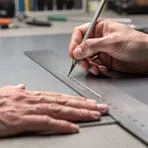
To mark a surface with a sharp point or write something carefully by hand

To scratch or scrape something so it gets a small mark
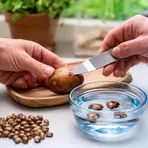
To make small cuts in seed coats so they take in water and grow
Antonyms

Idioms

- Informal
3
7.5
Use the least good options because nothing better is left

Phrasal Verbs



How Deep

Surface Forms
Etymology
Scrape comes from the old action word skrapa meaning 'to scratch' or 'to rub', and people used it for making lines in wood or stone. So to scrape a surface can mean to cut or write on it by rubbing with something sharp.