

to scarify
- verb
- /ˈskɛrəˌfaɪ/
- Specialized
- Before sowing the seeds, gardeners often scarify the soil to enhance water absorption.
Examples
-
To improve germination, it is recommended to scarify the tough outer coating of certain seeds.
-
"This whole process scarified the kernel and removed some of the aleurone layer, the black seed coat that is impervious to water," says Oelke.
Academic text (1998) -
I reached into branchy places delicately, kept an eye out when I used the hoe to scratch the roots of crabgrass or scarify the varnish of the drying rain.
Fiction book (1990) -
Farmers scarify compacted soil to allow better air and water flow for healthy crop growth.
Synonyms

 161
1.1
161
1.1

To cut or mark a surface by scraping it with something sharp
 62
1.2
62
1.2
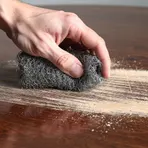
To rub material off a surface with something hard or sharp
33
3.5
To make a small cut on the skin or a surface, often by accident
 20
7.0
20
7.0
To make shallow cuts on a surface to help parts join together
 7
7.9
7
7.9
To cut into a surface with a sharp tool
 5
8.1
5
8.1
The surface wears away when something rubs or scrapes it
 2
4.2
2
4.2
To make a surface not smooth so it feels bumpy
 1
3.5
1
3.5
Make small cuts or marks on a surface by rubbing it

Wear away the surface of something by rubbing or scraping
How Deep

Surface Forms
Morphology
Etymology
Scarify is based on scar, meaning a 'cut', and gardeners use it to mean scratching seeds or the soil surface so water and air can get in. So, to scarify seeds or a lawn is to make small scratches that help seeds start to grow and roots get food and water.