
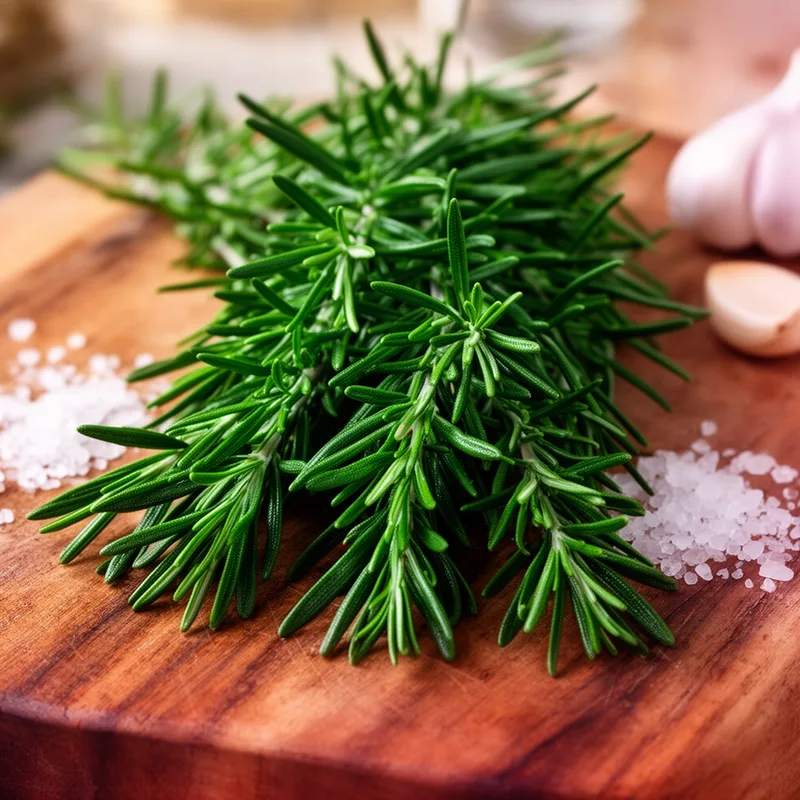
rosemary
 117
2.3
117
2.3

- noun
- /ˈroʊzməri/
- You add in the pecans, some fresh rosemary, and toss it with salt and pepper.
- rosemary leaf
- incense and rosemary
Loading YouTube…
Watch on YouTubeSo it's a cornbread with something with Rosemary salt.
- So it's a cornbread with something with Rosemary salt.
- It's fresh Rosemary and coarse sea salt.
- And then brought me this Rosemary crown that I wore in my hair while I got married.
- And we did these like kind of lollipop lamb chops recently with like fresh Rosemary from the garden.
- But lemongrass doesn't survive Peppers, Rosemary, they don't survive either.
- I'm just like a it's, it's sage, Rosemary, basil, sea salt.
- But that nutmeg, Rosemary, cinnamon, that's what you'd be doing.
Examples
-
I'm going to add some salt, pepper, Rosemary and thyme.
-
And we did these like kind of lollipop lamb chops recently with like fresh Rosemary from the garden.
-
OK, some Rosemary for the stuffing.
-
It's fresh Rosemary and coarse sea salt.
-
And it's like this sausage, chicken, Rosemary lemon dish.
-
I made roast lamb with rosemary and tapenade.
-
The people carrying incense and rosemary accompanied San Francisco into the church where prayers were recited.
Academic text (1994) -
I made roast lamb with rosemary and tapenade.
-
And we did these like kind of lollipop lamb chops recently with like fresh rosemary from the garden.
Synonyms
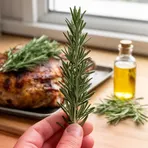
A fragrant evergreen plant with grey-green leaves used in cooking and to make perfume
Compounds


- Specialized
A thin evergreen shrub with small hanging pink or white flowers that grows in wet bogs
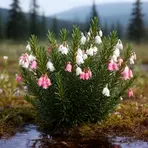
An evergreen shrub that grows in northern bogs with pink or white bell-shaped flowers

- Specialized
A small scented shrub with pink flowers that grows only near the Apalachicola River and is in danger

A plant with spikes of white or light purple flowers that grows in salt marshes

A low bog bush from northern Europe and Asia with leaves that smell strong and pleasant, not the cooking herb
How Fragrant

Surface Forms
Etymology
Rosemary comes from the Latin rosmarinus, made of ros meaning 'dew' and marinus meaning 'of the sea'. It was called 'dew of the sea' because it often grows near the coast and has a fresh, strong smell, and that's why we use it as an aromatic herb for cooking and fragrance.