
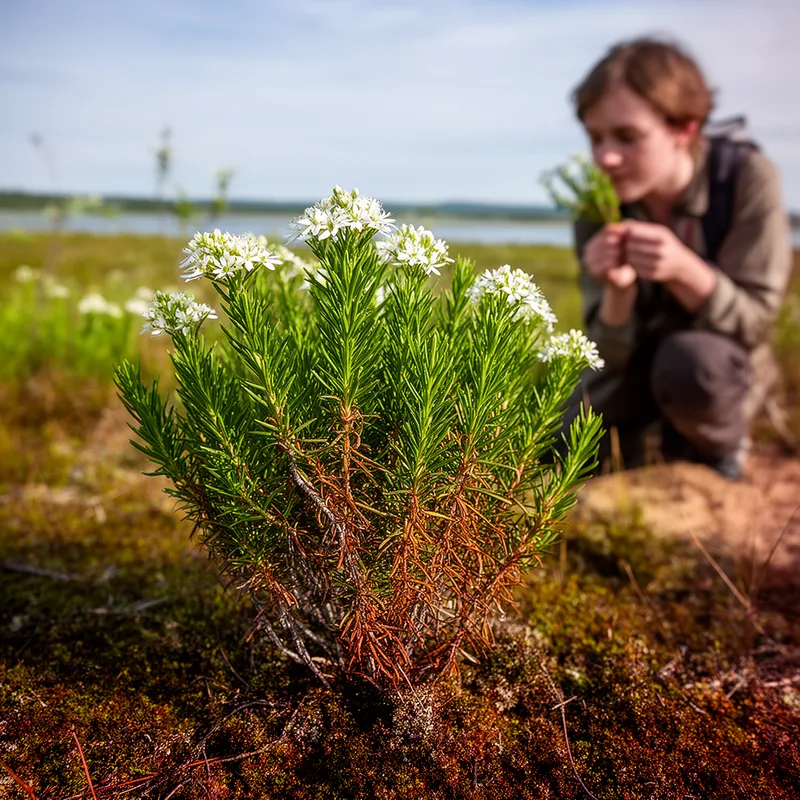
wild rosemary
- noun
- UK
- The marsh was dotted with patches of wild rosemary among the moss and grasses.
Examples
-
We identified the fragrant leaves of wild rosemary during our botany field trip.
-
I found some wild rosemary while hiking in Scotland.
-
Scientists are studying the medicinal properties of wild rosemary in traditional remedies.
-
The wild rosemary grows abundantly in the wetlands.
-
The marsh was dotted with patches of wild rosemary among the moss and grasses.
-
We identified the fragrant leaves of wild rosemary during our botany field trip.
-
I found some wild rosemary while hiking in Scotland.
Synonyms

A small shrub that grows in bogs in northern regions with scented leaves used for tea

A small bush with strong-smelling leaves that grows in bogs
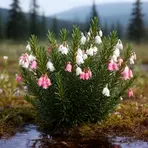
An evergreen shrub that grows in northern bogs with pink or white bell-shaped flowers

A thin evergreen shrub with small hanging pink or white flowers that grows in wet bogs
Surface Forms
Morphology
wild + rosemary
A B1 learner who knows 'wild' and 'rosemary' would naturally interpret 'wild rosemary' as the wild form of the herb (a straightforward compositional reading). However, the lexicalized plant name actually denotes a different bog shrub unrelated to true rosemary, so the precise botanical meaning is not reliably derivable from the constituents, making the phrase only partially transparent.
Etymology
Wild rosemary comes from a simple image: its leaves smell like the garden herb rosemary, even though the shrub lives in the wild and is a different plant. So the name helps you remember the plant by its scent, not because it is a real 'rosemary'.

