

bog rosemary
- noun
- /bɔg ˈroʊzmɛri/
- Specialized
- Bog rosemary prefers sphagnum bogs and thrives in acidic conditions.
- bog rosemary and leatherleaf
Examples
-
He photographed the delicate pink flowers of bog rosemary during his trip to northern Canada.
-
The wetland was dotted with clusters of bog rosemary and other rare plants.
-
The bog rosemary blooms beautifully in the spring.
-
We found a patch of bog rosemaries near the wetland.
-
The wetland was home to various species, including bog rosemary, which flourishes in acidic soil.
-
He photographed the delicate pink flowers of bog rosemary, capturing their beauty in the Arctic landscape.
-
In the northern regions, bog rosemary can be found thriving alongside other unique flora in boggy areas.
Synonyms
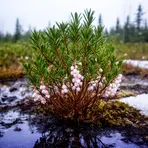
A thin evergreen bush that grows in wet, cold places with hanging groups of white or pink flowers
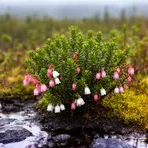
A small evergreen shrub that grows in wet, acidic places and has hanging pink or white flowers
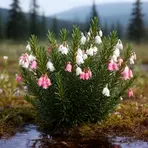
An evergreen shrub that grows in northern bogs with pink or white bell-shaped flowers

A small evergreen bush with pink or white hanging flowers that grows in acidic wet bogs
Surface Forms
Morphology
The noun combines 'bog' (a wet, peaty habitat) + 'rosemary' (an evergreen shrub), so a learner who knows both words can infer it denotes a rosemary-like plant that grows in bogs. This straightforward noun–noun compounding follows common patterns and is compositional rather than idiomatic, making it transparent to a B1 learner.
Etymology
Bog rosemary is named for where it grows and what it looks like: the word bog shows it lives in wet, muddy ground, and rosemary refers to its thin leaves that look like the garden 'rosemary', though it is not the cooking herb. That's why the name helps you remember it means 'a small evergreen shrub that grows in bogs'.

