

to ravel
- verb
- /ˈrævəl/
- He used a needle to ravel the knots in the fishing line, ensuring it would function properly.
Examples
-
The raveled skein of yarn that is the story's tragic element, the labyrinthine free-falls of choice, the momentum of things out of control, of fear and human failings.
Fiction book (2000) -
Then the old stocking was raveled and the yarn was wound on this rubber basis until the ball reached the proper proportions, when it was covered with leather.
Blog text (2) -
Just this one loose end to ravel up.
-
Our conclusion was that sleep knits up the raveled sleeve of care.
Fiction book (2002) -
But some people got an e-mail address and then some people got a Geocities page and it's and it unravels or ravels forward.
-
With methodical strokes, he sliced up the belt, shredding the gift until it was no more than a pile of raveled glittering threads.
Fiction book (1999) -
After hours of careful work, she finally managed to ravel the tangled threads of the fabric.
-
The detective worked tirelessly to ravel the clues left behind at the crime scene.
Synonyms

 75
4.4
75
4.4

To find out what really happened in a confusing situation
 38
4.3
38
4.3
To come apart into threads, like a rope or cloth
 10
3.5
10
3.5
To separate threads or cords that are twisted together
 1
5.3
1
5.3
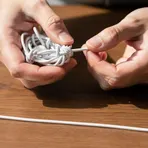
To free something twisted and knotted, like a cord


 1
7.6
1
7.6
To free something from a tangle, like knots in rope or wire
 1
7.4
1
7.4
To separate things that are twisted together, like cables or yarn
 1
8.6
1
8.6
To take apart threads that form cloth or a basket
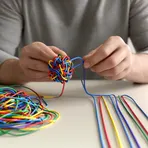
To separate twisted threads or make a confused situation clear
Antonyms

Phrasal Verbs

How Untangled

Surface Forms
Etymology
Ravel comes from an old Dutch word that meant 'to tangle' or 'to fray', but because of the related English word unravel people also started using ravel to mean 'to untangle' or separate threads. So a helpful way to remember this sense is to think of pulling threads apart to 'undo' a knot, like the action in unravel.