

to ravage
 73
6.6
73
6.6

- verb
- /ˈrævɪdʒ/
- A cycle of fear and hatred grips America and conflict still does ravage much of the world.
- ravaged by war
- ravaged the country
- ravaged the city
Loading YouTube…
Watch on YouTubeCOVID is going to ravage this country.
- COVID is going to ravage this country.
- The opioid epidemic continues to ravage our communities.
- We need greater investment as this dual pandemic ravages America.
- And that's what's so dangerous about it is that it's just this new thing that can totally ravage, ravage us.
- If you can harness that incubus fly across time and space to ravage the maidens and the sororities.
Examples
-
For two decades, wars ravaged Nicaragua: first in the cities; then in the countryside.
Academic text (1990) -
Each day on the drive downtown to the theater, we passed deserted and ravaged neighborhoods.
Fiction book (1993) -
COVID is going to ravage this country.
-
But time and wars ravage our works as well as our bodies.
Academic text (1994) -
It's being ravaged as we speak.
-
The entire economic, political, and social infrastructure has been ravaged by civil war.
Academic text (1993) -
Each year, fires ravage nearly a half-million square miles of grasslands in subequatorial Africa.
Academic text (2000) -
Electoral fraud and endemic corruption have once again ravaged a promising democratic experiment.
Academic text (2008) -
They proceeded to ravage Croatia, Bosnia, Serbia and Bulgaria until they reached the Theodosian Walls.
-
The hurricane will ravage the coastal areas, leaving many homes destroyed.
Synonyms
 ∞
1.0
∞
1.0
Damage something so badly that it cannot be used or fixed
 225
2.9
225
2.9
To badly damage or destroy something
 221
4.9
221
4.9
To destroy something greatly or make people feel deeply shocked and sad
 137
4.9
137
4.9
To break rock or walls using explosives to make an opening
 72
5.1
72
5.1
To make someone's hopes, confidence, or plans fail completely
 63
7.5
63
7.5
To destroy completely, often killing many people
 38
4.7
38
4.7
To destroy a place completely, leaving only ruins
 33
7.7
33
7.7
To destroy something completely as if by a powerful weapon
 30
8.7
30
8.7
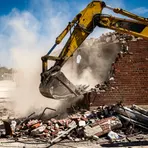
To severely damage something so it cannot be used
 17
7.1
17
7.1
To completely destroy a building or area so nothing is left
 15
4.2
15
4.2
Completely destroy an idea, argument, or reputation
 15
7.6
15
7.6
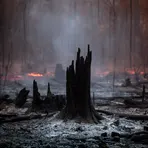
To destroy something completely so nothing is left
 12
7.9
12
7.9
To destroy a place and leave it ruined
 10
6.9
10
6.9
Tear something into many pieces or say very bad things about it
 10
8.7
10
8.7
To pull something apart with great force
 5
4.7
5
4.7
To damage something very badly so it breaks into pieces
 1
9.1
1
9.1
To cause great suffering or damage


 1
7.2
1
7.2
Make a place empty and lifeless by destroying or leaving it
Antonyms


How Destructive

Surface Forms
Etymology
The word ravage comes from Old French and from the Latin root rapere, which meant 'to seize' or 'to grab'. Think of a raptor, a bird that grabs and tears its prey; that's why to ravage means to tear apart or cause severe damage.