

to probe
 35
5.1
35
5.1

- verb
- /proʊb/
- Literature
- Other instructors were present to engage with the groups and to probe their thinking.
- probe for information
- probe with questions
- probe deeply
Loading YouTube…
Watch on YouTubeIt doesn't do to try to probe what these factions represented too much.
- It doesn't do to try to probe what these factions represented too much.
- Instead, it's churchmen themselves asking questions, probing, saying, oh, wait a second, what about this?
- You're looking for regions in which it is OK or not OK to probe?
- Like understanding, you can't probe consciousness just by observing what goes in and comes out.
- And it's mostly how we reckon our with our ignorance of our environment, even when we probe it for knowledge.
- But there's zero appetite to look into it, to report on it, to probe it at all.
- So hanging out with people you resemble is a kind of a way of probing your match with the environment.
- Some Croat deputies grow increasingly rebellious and probe how far they can forward tribal interests and get away with it.
- I look forward with you to hearing them probe the challenges involved with keeping the arts alive and well in America.
- That is that, that Americans are constantly probing one another to say, are you on my side or are you on their side?
- I'm Lex, so I can't probe another entities.
- Be those things would be the things that that I would I would constantly probe at.
- He probes my Proust, not my prostate, but still.
Examples
-
Each spring, we organize a conference that probes an issue of broad public concern that is not often thought about in terms of gender.
-
Next, the teacher probes for what the students might need to know to read for meaning.
Academic text (2012) -
I look forward with you to hearing them probe the challenges involved with keeping the arts alive and well in America.
-
And I want you all to feel free to probe into any areas at all... ... that might be of interest to you.
-
You survey the damage, find out everything you can, probe, and leave nothing to chance.
Fiction book (2000) -
My second point is that we need to probe more closely into what is involved in belief.
Academic text (1995) -
After asking students to explain their thinking, Stacy may need to probe for further information.
Academic text (2012) -
Psychiatry is an effort to probe into the dark, undiscovered world of the mind.
-
Frances asked some neutral questions to get a baseline, then began to probe his violent memories again.
Fiction book (2002) -
The detective needed to probe deeper into the suspect's alibi to uncover the truth.
Synonyms
 ∞
1.0
∞
1.0
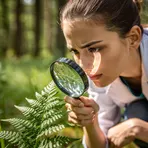
To try to find something or someone by looking carefully
 ∞
2.8
∞
2.8
To look carefully at something to find facts
 ∞
2.5
∞
2.5
To look at or test something to learn more about it
 ∞
1.0
∞
1.0
To look at something carefully to understand it
 675
3.2
675
3.2
To study something carefully to understand it better
 573
2.8
573
2.8
Examine something carefully to find out more
 471
2.3
471
2.3
To study something carefully to learn more about it
 300
3.1
300
3.1
To study a subject carefully to find new facts
 137
3.9
137
3.9
Find the real reason for a problem by checking carefully
 70
6.2
70
6.2
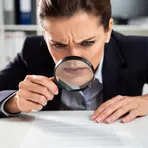
To look at something very carefully to check for mistakes
 70
3.7
70
3.7
To look at something carefully, often by searching under the surface
 61
4.7
61
4.7
To look deeply into a subject to find information
 53
3.1
53
3.1
To ask someone many questions in a formal way to find out facts
 51
3.7
51
3.7
To officially start a careful check by a government, company, or the police
 48
3.7
48
3.7
To look carefully at something to learn about it
 43
4.4
43
4.4
Search carefully to find hidden facts or details
 23
4.4
23
4.4
To find hidden facts or things by careful searching
 16
3.7
16
3.7
To ask questions as part of an official investigation
 14
8.4
14
8.4
To find out what is happening by looking for facts and clues
 13
6.7
13
6.7
To search carefully to find hidden facts or documents
 7
7.4
7
7.4
To examine something deeply to learn more about it

To examine something carefully to find hidden details

To examine by probing with a tool or by asking questions
Antonyms

Phrasal Verbs

Compounds

- Specialized
11
4.2
A machine sent into space without people to study planets and send information back
How Thorough

Surface Forms
Etymology
Probe comes from the old Latin verb probare meaning 'to test', and is related to prove. To probe with questions is to test ideas or answers and try to find the truth.