

to probe
 23
4.6
23
4.6

- verb
- /proʊb/
- And this, the act of asking questions, probing the universe and finding answers, is the passing of a torch.
- probe the structure
- probe the interior
- probe with telescopes
Loading YouTube…
Watch on YouTubeWell, I was able to probe the circuitry.
- Well, I was able to probe the circuitry.
- But I'd like to just probe this third question first.
- How can we even hope to to probe a theory which is so extreme?
- The deeper you probe, the more troubling the story became.
- And and that's because we can use very fine electrodes to probe the brains of frogs.
- Whereas Roman's map will be smaller but deeper, and it will probe those galaxies at much greater distances.
- Instead of needing to probe out into the water for food, they let it drift right to them.
- But perhaps by studying these voids and super voids to probe dark energy further, we might be able to resolve this conflict of how the universe actually is.
- And so I'd like to probe the role of long non coding RNAs in the development, in embryonic development of particular types of neurons.
- I couldn't wait to probe Robe, pun intended.
Examples
-
The scientists used the new instrument to probe the ocean floor for signs of ancient life.
-
If so, the photon gives us a tool to probe the structure of time.
Academic text (1995) -
And we will be using that to probe the structure of matter.
-
And I will probe further before that actually happens.
-
So you can really probe the very early days of the solar system.
-
Thus, nature provides a way for us to probe the otherwise invisible interior of a star.
Academic text (1993) -
The philosophical questions leading to such insights must always probe beyond the obvious.
Academic text (1993) -
The deeper you probe, the more troubling the story became.
-
Today they are at the same site, readying the historic telescopes to probe the night sky.
Academic text (1999) -
Beginning in about 1970, experiments designed to probe the nucleon's spin substructure were conceived, proposed, and executed.
Academic text (1995)
Synonyms
 ∞
2.8
∞
2.8
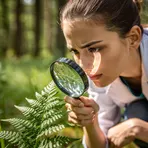
To look carefully at something to find facts
 ∞
1.0
∞
1.0
To look at something carefully to understand it
 868
2.5
868
2.5
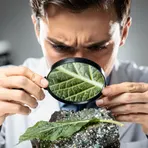
To look at something carefully to find facts or problems
 675
3.2
675
3.2
To study something carefully to understand it better
 573
2.8
573
2.8
Examine something carefully to find out more
 471
2.3
471
2.3
To study something carefully to learn more about it
 300
3.1
300
3.1
To study a subject carefully to find new facts
 70
3.7
70
3.7
To look at something carefully, often by searching under the surface
 61
4.7
61
4.7
To look deeply into a subject to find information
 48
3.7
48
3.7
To look carefully at something to learn about it
 7
7.4
7
7.4
To examine something deeply to learn more about it
 1
5.1
1
5.1
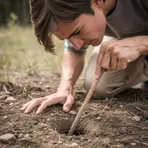
To look closely at something by touching or prodding it
 1
4.2
1
4.2
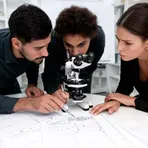
Look at a report or plan very closely to find small mistakes

To examine by probing with a tool or by asking questions

To examine something carefully to find hidden details
Antonyms

Phrasal Verbs

Compounds

- Specialized
11
4.2
A machine sent into space without people to study planets and send information back
How Thorough

Surface Forms
Etymology
Probe comes from the old Latin verb probare meaning 'to test'. To probe something is to test or examine it closely, often with an instrument, to discover hidden parts.