
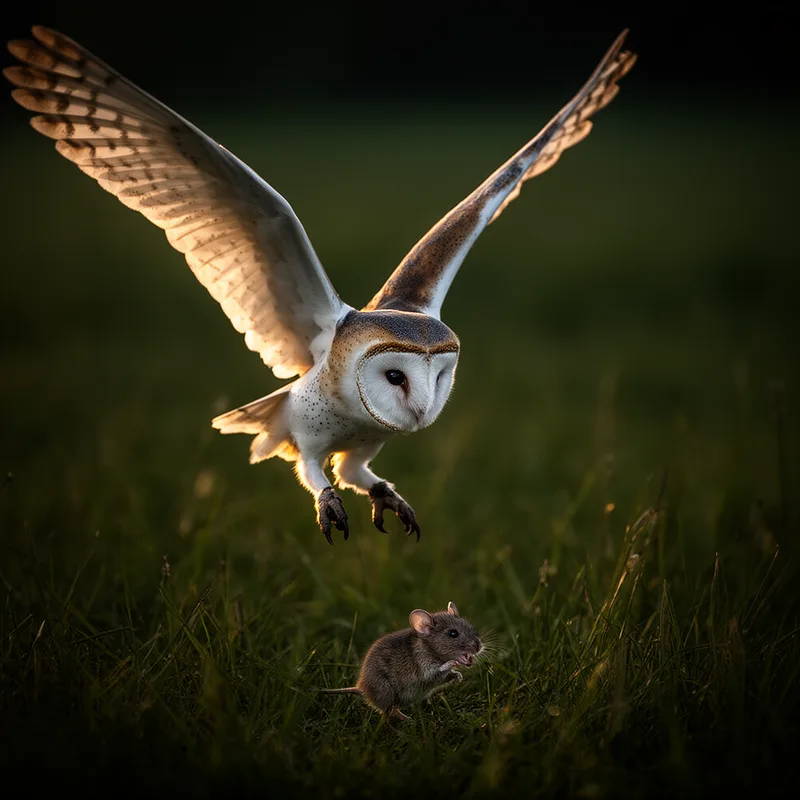
to prey
 16
3.7
16
3.7

- verb
- /prɛɪ/
- During the night, owls prey on mice and insects to feed their young.
- prey on fish
- prey on animals
- prey on insects
Loading YouTube…
Watch on YouTubeI you actually can because then coyotes will come and get those ants, frogs, lizards and other critters that prey on small insects near water.
- I you actually can because then coyotes will come and get those ants, frogs, lizards and other critters that prey on small insects near water.
Examples
-
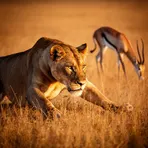
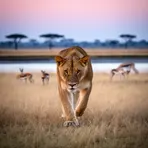
The lion often preys on zebras and antelopes in the savanna.
-
Nonetheless, crabs occasionally prey on seahorses, as do large fish such as tuna, snappers, skates, and rays.
Academic text (1990) -
Think they should be with fish... and they - that way they could only prey on fish.
-
The sea swarms with living things that prey on one another to survive.
-
But for the most part, animals don't prey on human beings.
-
The fact seems to be that wolves prefer to prey on wild rather than domestic ungulates.
Fiction book (1998) -
But while bears usually only prey on other animals during chance encounters, wolves actively track them down.
Academic text (1999) -
Without those animals to prey on, Archaic peoples relied on smaller animals and plants for their food.
Academic text (2011) -
They prey on great white nurseries as a reliable food supply.
-
Hawks prey on small rodents and other birds while soaring high in the sky.
Synonyms
 426
1.0
426
1.0
To eat food, especially for animals
 367
1.4
367
1.4
To chase and kill wild animals for food or sport
 69
2.9
69
2.9
To eat something or get strength and ideas from it
 6
4.0
6
4.0
Chase and take wild animals for food or sport
 1
7.2
1
7.2
To hunt and eat another animal

To take goods by force from places during war or attack
Phrasal Verbs




Compounds

How Predatory
- NSFW
29
7.2
 53
3.9
16
3.7
884
2.8
4
6.7
22
4.9
53
3.9
16
3.7
884
2.8
4
6.7
22
4.9
Surface Forms
Etymology
Prey comes from the old Latin word praeda, meaning 'booty' or 'something taken'. To prey on an animal is to hunt, catch, and feed on it, keeping the original idea of taking something for food.