
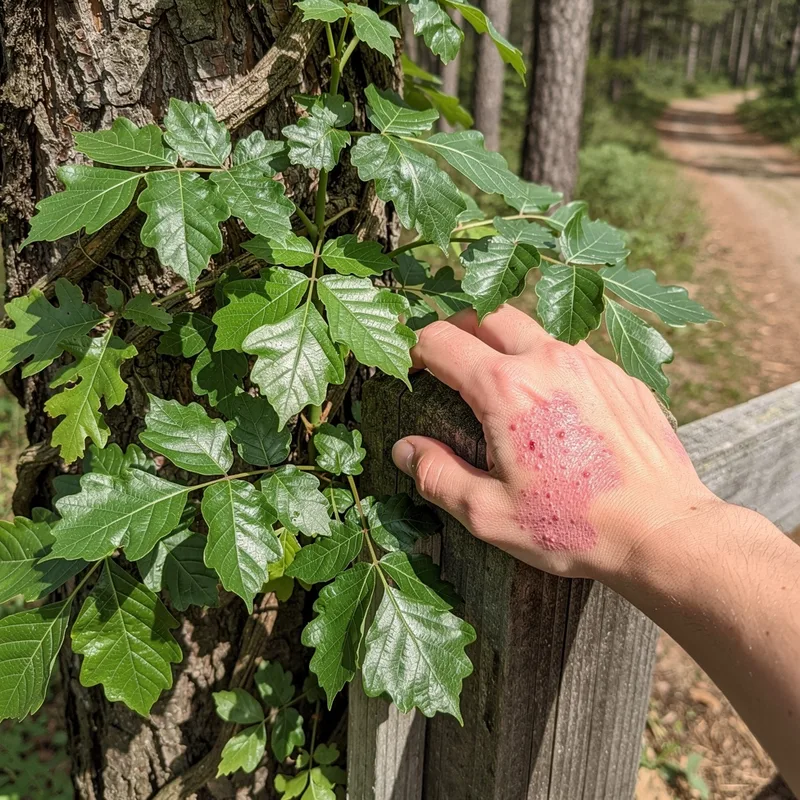
poison oak
 3
6.5
3
6.5

- noun
- /ˈpɔɪzən oʊk/
- US
- During our picnic, someone accidentally brushed against the poison oak near the trail.
- watch out for poison oak
- growing poison oak
- poison oak is common
Examples
-
Watch out for the poison oak there.
-
I get poison oak every year in January when it starts to bloom here in California.
Blog text (21) -
The government had maintained the island lighthouse, now a pile of moss-covered concrete blocks overcome and entwined by tangled briars and poison oak.
Fiction book (1999) -
The property is overrun with poison oak and wild blackberries, whose slender early summer blossoms litter the driveway now with petals and the promise of a good August harvest.
Fiction book (2001) -
Be careful not to touch that plant; it's poison oak and it can irritate your skin.
-
After hiking in the woods, I discovered that I had a rash from poison oak on my arms.
Synonyms
 9
4.2
9
4.2
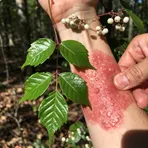
A climbing plant with three leaflets and white berries that causes an itchy rash when touched


 1
9.9
1
9.9
A group of shrubs and small trees with leaves that cause a skin rash

A shrub that causes an itchy skin rash when you touch it, called poison oak

A plant that causes a skin rash when you touch it

A poisonous bush on the Pacific coast that causes a skin rash when touched
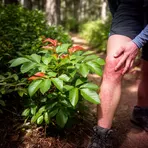
A poisonous shrub on the Pacific coast of North America that causes an itchy rash when touched

A poisonous shrub on the west coast of North America that causes an itchy skin rash when touched
How Irritating
- US
3
6.5
 15
6.0
15
6.0
Surface Forms
Morphology
The meaning is directly derivable from combining 'poison' (harmful substance) with 'oak' (a type of tree): a learner will infer it is an oak that is harmful/poisonous. Noun–noun compounds that name a harmful plant are cross-linguistically common, so a B1 learner who knows both constituents will generally understand that this refers to a poisonous/irritant plant (likely causing a rash).
Etymology
Poison oak is a plant whose name joins poison (the oily stuff it makes that can hurt your skin) and oak (because its leaves look like oak leaves). That's why the name warns you to avoid touching the plant.