

Rhus diversiloba
- noun
- /rəs ˌdɪvərˈsɪloʊbə/
- Specialized
- The hiker developed a severe rash after brushing against Rhus diversiloba along the trail.
Examples
-
Contact with Rhus diversiloba can cause an allergic skin reaction in many people.
-
Botanists warn that Rhus diversiloba is highly irritant and should be identified accurately in the wild.
-
Be careful around Rhus diversiloba!
-
I saw Rhus diversiloba growing near the trail.
-
Contact with Rhus diversiloba can cause an allergic skin reaction in many people.
-
The hiker developed a severe rash after brushing against Rhus diversiloba along the trail.
-
Botanists warn that Rhus diversiloba is highly irritant and should be identified accurately in the wild.
Synonyms

 3
6.5
3
6.5

A climbing or spreading plant with oak-like leaves that makes oil causing skin rash
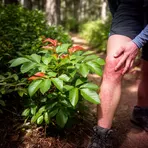
A poisonous shrub on the Pacific coast of North America that causes an itchy rash when touched

A poisonous shrub on the west coast of North America that causes an itchy skin rash when touched
Surface Forms
Morphology
Rhus + diversiloba
This is a scientific Latin binomial: even if a learner knows 'Rhus' as a type of sumac, the second element 'diversiloba' is not a known English word and the label is a taxonomic name rather than a compositional phrase. Botanical Latin names are specialized and not transparently mapped onto everyday meanings like 'poison oak,' so a B1 learner would not be able to derive the MWE meaning from the constituents.
Etymology
Rhus diversiloba is the scientific name for Pacific poison oak. The second word, diversiloba, points to leaves with 'different lobes', and touching the plant causes a skin 'rash', so the name reminds you it is a 'poisonous shrub' to avoid.