
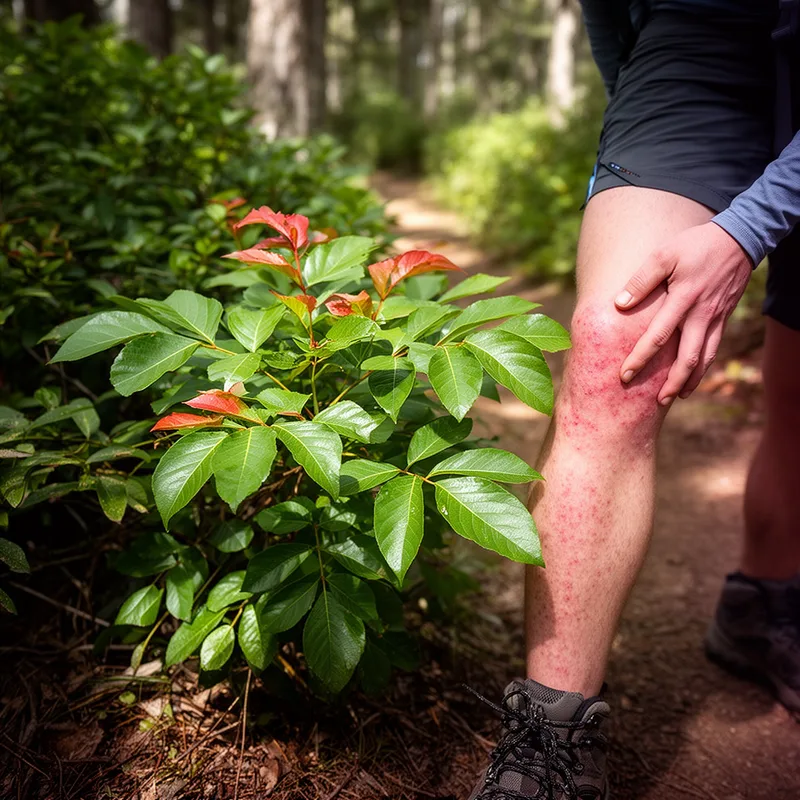
Toxicodendron diversilobum
- noun
- /ˌtɒkɪˈkoʊdɛndrən ˌdaɪvərsɪˈloʊbəm/
- Specialized
- Many hikers develop a rash after brushing against Toxicodendron diversilobum on California’s trails.
Examples
-
Wearing long sleeves can help prevent contact with Toxicodendron diversilobum during forest work.
-
Many hikers are allergic to Toxicodendron diversilobum.
-
Toxicodendron diversilobum can be difficult to identify when it loses its leaves in winter.
-
Be careful around Toxicodendron diversilobum!
-
Many hikers develop a rash after brushing against Toxicodendron diversilobum on California’s trails.
-
Wearing long sleeves can help prevent contact with Toxicodendron diversilobum during forest work.
-
Be careful around Toxicodendron diversilobum if you have sensitive skin!
Synonyms

 3
6.5
3
6.5

A climbing or spreading plant with oak-like leaves that makes oil causing skin rash

A poisonous shrub on the west coast of North America that causes an itchy skin rash when touched

A poisonous bush on the Pacific coast that causes a skin rash when touched
Surface Forms
Morphology
Toxicodendron + diversilobum
This is a technical Latin binomial: the genus 'Toxicodendron' (given as a shrub that causes skin irritation) already conveys the core meaning of a poisonous/irritant plant, but the species epithet 'diversilobum' is Latin and not a common English word (no dictionary definition provided). Because the genus gives a clear clue while the specific epithet is specialized and not interpretable by a B1 learner, the overall transparency is partial rather than fully transparent or fully opaque.
Etymology
Toxicodendron diversilobum gets its name from old word parts: Toxicodendron means 'poison tree' and diversilobum shows its different leaves. People learned to avoid the plant because touching it gives a bad itchy rash, so the name is a warning that the plant is poisonous.