
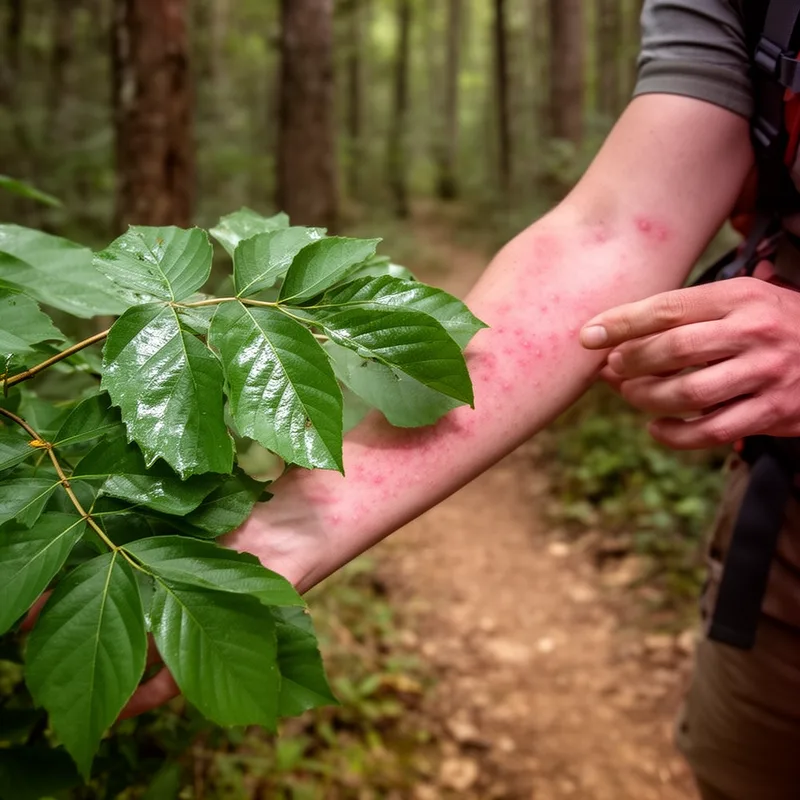
eastern poison oak
- noun
- /ˈiːstərn ˈpɔɪzən oʊk/
- US
- Hikers should avoid touching eastern poison oak because its oil can trigger an allergic reaction.
Examples
-
After brushing against eastern poison oak, she developed an itchy rash on her arm.
-
The forest ranger pointed out the dense patch of eastern poison oak along the trail.
-
I saw an eastern poison oak in the park.
-
Avoid touching eastern poison oaks during hikes.
-
Hikers should avoid touching eastern poison oak because it causes skin irritation.
-
After brushing against eastern poison oak, she developed an itchy rash on her arm.
-
The forest ranger warned us about eastern poison oak growing near the hiking trail.
Synonyms

 3
6.5
3
6.5

A climbing or spreading plant with oak-like leaves that makes oil causing skin rash

A shrub that causes an itchy skin rash when you touch it, called poison oak

A poisonous bush that causes a skin rash when you touch it
A poisonous shrub from the southeastern United States that causes a rash when its leaves or sap touch the skin
Surface Forms
Morphology
The phrase is transparently built from its parts: 'poison' (harmful substance) + 'oak' (a type of tree/plant) yields a poisonous plant, and 'eastern' simply marks a regional variety. This compositional pattern (a modifier + a noun phrase naming a harmful plant) is cross-linguistically common, so a B1 learner who knows the constituents will infer it denotes a poisonous plant likely to cause skin irritation.
Etymology
Eastern poison oak gets its name from two clear pictures: its leaves look like an oak tree's leaves, and its oil is like poison, causing an itchy rash. The word 'eastern' shows it grows in the eastern United States, so the name means 'a plant that causes an itchy skin reaction'.