
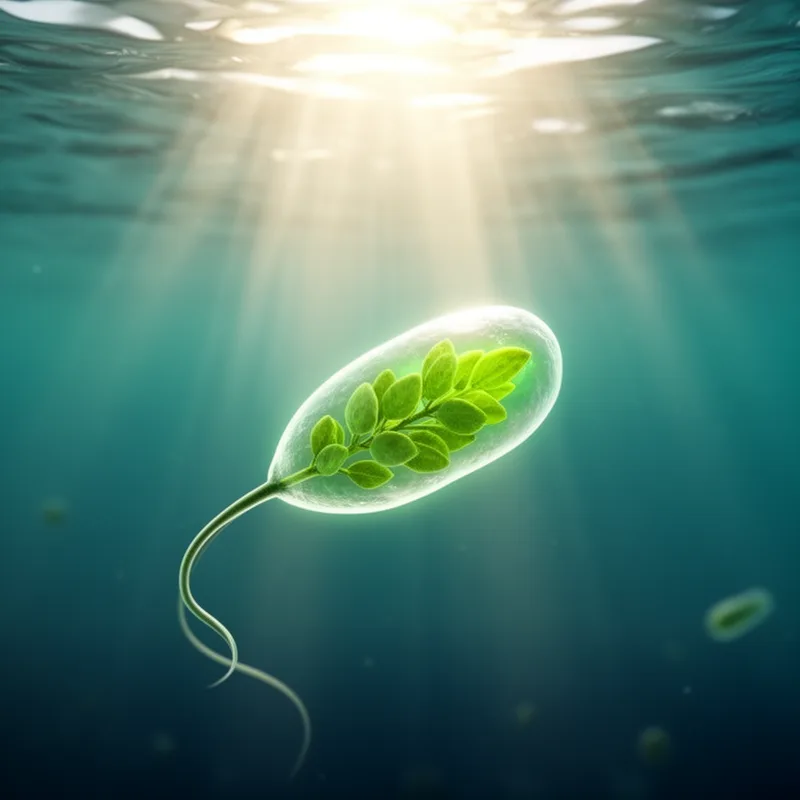
plantlike flagellate
- noun
- /ˈplæntˌlaɪk fləˈdʒɛleɪt/
- Specialized
- The study focused on the movement of plantlike flagellates in response to light.
Examples
-
Researchers observed that plantlike flagellates play an important role in aquatic ecosystems.
-
Certain plantlike flagellates can survive in both freshwater and marine environments.
-
The plantlike flagellate thrives in freshwater environments.
-
Many plantlike flagellates contribute to the ocean's ecosystem.
-
Certain plantlike flagellates can survive in both freshwater and marine environments.
-
Researchers observed that plantlike flagellates play an important role in aquatic ecosystems.
-
Many plantlike flagellates contribute to the ocean's ecosystem.
Synonyms

 4
3.6
4
3.6

A simple green plant that grows in water and has no roots, stems, or leaves

 1
9.9
1
9.9
A single-celled green organism with two tail-like parts that help it swim in fresh water
A group of plantlike single-celled organisms with a tail-like part that make food from light
A group of mostly single-celled water organisms like algae that move using a thin tail-like part
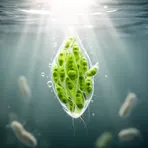
A group of one-celled freshwater living things with a tail-like part that often make food like plants
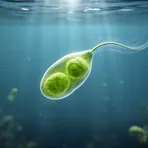
A single-celled living thing in water, often green, with a tail used to move
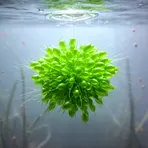
A group of bright green algae with tail-like parts that live in freshwater
Surface Forms
Morphology
The noun phrase is a straightforward adjective+noun composition: 'plantlike' (resembling a plant) combined with 'flagellate' (a single-celled organism with flagella) yields an organism resembling a plant that has flagella. This follows normal compositional English patterns and, despite its scientific register, a B1 learner who knows both constituents can reliably infer the intended meaning.
Etymology
Plantlike flagellate: The term plantlike flagellate comes from how these tiny living things look and move. They are called plantlike because they can make food from light, and flagellate refers to 'flagella', tiny whip-like tails they use to swim, so the name means a 'single cell' that is 'like a plant' but can move with tails.