

flagellate
 1
9.9
1
9.9

- noun
- /fləˈdʒɛlɪt/
- Specialized
- Their so-called phylum Archaeprotista is polyphyletic: Archamoebae and metamonad flagellates independently lost mitochondria and are no closer phylogenetically than animals and plants.
- flagellates, bactivorous
- mixotrophic flagellates
- heterotrophic flagellates
Examples
-
A previous study reported that phosphate limitation could increase lipid content in P. tricornutum, but not in green flagellates 25.
Blog text (18) -
If you don't welcome third-world invasion and self-flagellate over sins by people who superficially resemble you, and in perpetuity, then you are a neo-Nazi.
Blog text (23) -
This sponge has nine and this kind of flagellate doesn't have any.
-
The blogger must be a very sad person indeed if he or she continually self-flagellates this way.
Blog text (8) -
While childless greenies from developed countries self-flagellate, the world moves on.
Blog text (4) -
Four sequences showed homology (80%) with flagellates from different vertebrate classes, whereas the remaining five sequences were excluded because of insufficient quality.
Academic text (2012) -
Disequilibria are exemplified by the grazing fluxes on mixotrophic and heterotrophic flagellates, both of which exceed the pool sizes of the prey.
Academic text (1999) -
The flagellate uses its whip-like appendages to swim through the water.
-
Some flagellates can cause diseases in humans, while others are harmless and free-living.
-
In pond water, you can often find tiny flagellates moving rapidly with their flagella.
Synonyms

A one-celled organism that moves with whip-like tails and can cause disease in animals or people
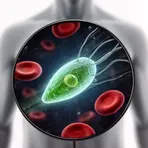
A single-cell creature that moves with tail-like parts and can cause disease in people

A single-celled organism that moves using whiplike tails and sometimes causes disease in people
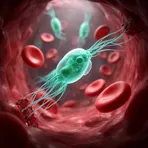
A single-celled animal that has whip-like tails and can cause disease in people or animals
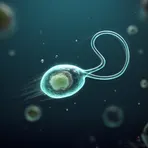
A cell with one or more long tails it uses to move
Compounds
- Specialized
A single-cell creature that moves with tail-like parts and can cause disease in people

- Specialized
A one-celled water living thing that makes food from light and moves with a tail
How Flagellated

Surface Forms
Etymology
Flagellate comes from the Latin word flagellum, which means 'whip', and scientists used it for tiny single-celled creatures because they move with one or more whip-like tails called flagella; so a flagellate is a little living cell that moves by a 'whip'.