
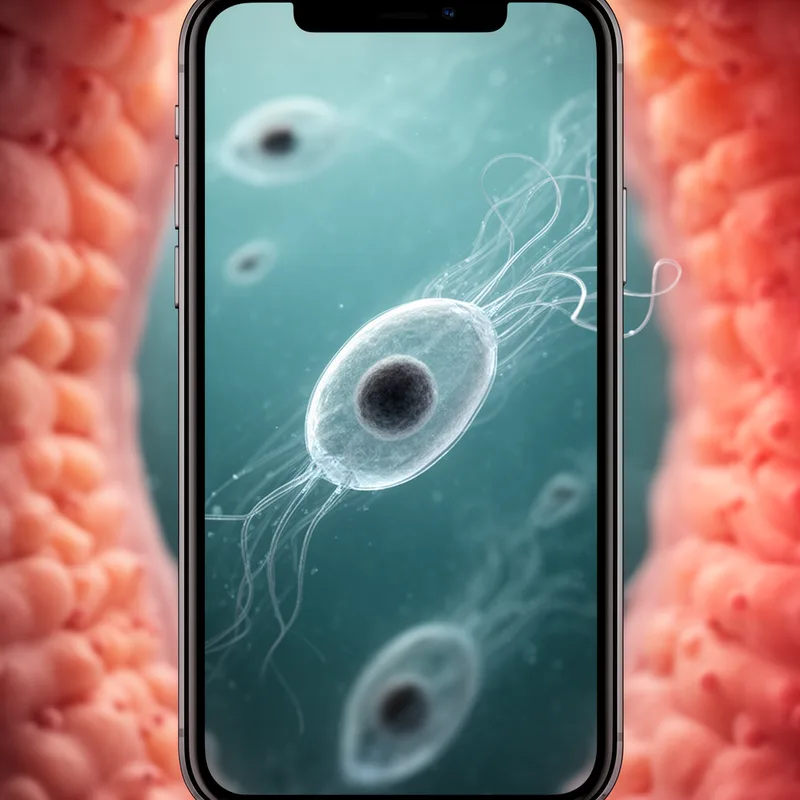
flagellated protozoan
- noun
- /fləˈdʒɛlɪˌteɪɪd proʊtəˈzoʊən/
- Specialized
- The flagellated protozoan Dientamoeba fragilis is one of the most common parasites in the intestinal tract of humans (1).
Examples
-
The flagellated protozoan Giardia lamblia can cause severe gastrointestinal symptoms in affected individuals.
-
Scientists study the flagellated protozoan Trypanosoma brucei to understand its role in causing sleeping sickness.
-
Under a microscope, the flagellated protozoan exhibits rapid movement thanks to its long, whip-like tail.
Synonyms

 1
9.9
1
9.9

A tiny living thing made of one cell that moves with whip-like tails
A single-cell creature that moves with tail-like parts and can cause disease in people

A tiny single-celled creature with many long tail-like parts it uses to move

A single-celled organism that moves using whiplike tails and sometimes causes disease in people
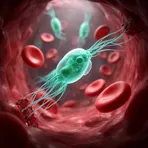
A single-celled animal that has whip-like tails and can cause disease in people or animals

A tiny single-celled animal-like creature that swims with a tail-like part and absorbs food

A cell with one or more long tails it uses to move

A tiny one-celled creature that lives in the sea with a hard plate-like outer shell

Relating to single-celled water organisms with a collar of tiny moving hairs

A one-celled water living thing that makes food from light and moves with a tail
Surface Forms
Morphology
This is a straightforward adjectival noun phrase where the meaning is compositionally built from 'flagellated' (having whip-like appendages) + 'protozoan' (a single-celled organism). A B1 learner who knows both constituents can directly infer it refers to a protozoan that moves by flagella; the pattern (adj + noun) is regular and cross-linguistically transparent.
Etymology
Flagellated protozoan names a tiny, single-celled creature. Here flagellated means it has one or more long, whip-like tails called 'flagella' that it waves to swim, and protozoan means a single-celled, animal-like organism. So the phrase points to a tiny swimmer that can sometimes 'cause disease'.