

flagellated
- adjective
- /fləˈdʒɛlɪtɪd/
- Specialized
- In a microscope slide, the flagellated protozoa appeared active as they moved swiftly in all directions.
Examples
-
The flagellated algae can be found in various aquatic environments, contributing to the ecosystem.
-
These pores open into chambers that are lined with layers of flagellated cells that are constantly in motion.
Academic text (1998) -
On the one hand, the flagellated bacteria are able to carry DNA messages introduced inside their cytoplasm.
Academic text (2011) -
Interestingly, many of the phytoplankton are composed of flagellated species.
Academic text (1999) -
The flagellated protozoan Dientamoeba fragilis is one of the most common parasites in the intestinal tract of humans (1).
Academic text (2012) -
Robert E. Buchanan coined the term B. bacteriovorus. Bdellovibrio are highly motile, flagellated, tiny, measuring about 0.25 x 1.0 m, Gram-negative Deltaproteobacteria.
Academic text (2017) -
Some flagellated microorganisms use their whip-like appendages to propel themselves through water.
Synonyms

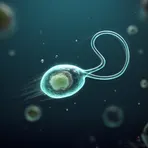
Relating to a long thin tail that cells use to move

Having whip-like tails used to move
Compounds

- Specialized
A one-celled organism that moves with whip-like tails and can cause disease in animals or people
How Flagellated

Surface Forms
Morphology
flagellated = flagellate (transparent) = flagellate + ed
Standard past-participle/adjectival formation from 'flagellate' yields 'having flagella' or 'having been whipped', which is directly derivable by learners who know the base.
Etymology
Flagellated comes from the Latin word flagellum, which means 'whip'. Imagine tiny cells with little 'whips' or tails that they beat to swim, so a flagellated organism is one that has whip-like tails for movement.

