

flagellate
- adjective
- /fləˈdʒɛlɪt/
- Specialized
- Some protists are flagellate, using whip-like appendages for movement.
Examples
-
The flagellate structure of certain bacteria enables them to swim efficiently.
-
The flagellate organism moved swiftly through the water.
-
Under the microscope, the flagellate cells were easy to identify by their distinctive tails.
-
Many flagellate species are found in freshwater environments.
-
Certain flagellate organisms have long, whip-like tails that aid in their movement through water.
-
The flagellate form of the microbe allows it to swim towards light sources in its environment.
-
In aquatic ecosystems, flagellate algae play a crucial role in the food web by serving as a primary food source.
Synonyms
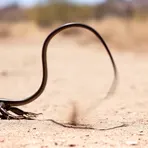


 1
7.3
1
7.3
Long, thin, and flexible like a whip

Having one or more long thin tails that help the cell move
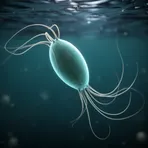
Thin, flexible part that moves like a whip

Relating to a long thin tail that cells use to move
Compounds
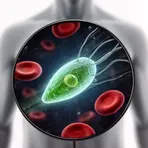
- Specialized
A single-cell creature that moves with tail-like parts and can cause disease in people

- Specialized
A one-celled water living thing that makes food from light and moves with a tail
Surface Forms
Morphology
Etymology
Flagellate as an adjective comes from the Latin flagellum meaning 'whip', and it describes something that is 'whip-like' or has a whip, for example a tail that looks and moves like a 'whip'.