

Phytomastigina
- noun
- /ˌfaɪtəˈmæstɪdʒɪnə/
- Archaic
- Researchers are studying Phytomastigina to understand photosynthetic processes in unicellular organisms.
Examples
-
Traditionally, Phytomastigina were grouped with algae due to their chlorophyll content.
-
Some species classified as Phytomastigina play an important role in aquatic ecosystems.
-
The Phytomastigina are fascinating organisms to study.
-
Many scientists research Phytomastigina for their unique characteristics.
-
Scientists often examine Phytomastigina to learn more about their role in the food chain of freshwater ecosystems.
-
In the laboratory, researchers cultured Phytomastigina to analyze their chlorophyll production.
-
The discovery of new Phytomastigina species has broadened our understanding of plantlike protists.
Synonyms

 4
3.6
4
3.6

A simple green plant that grows in water and has no roots, stems, or leaves

A one-celled water living thing that makes food from light and moves with a tail
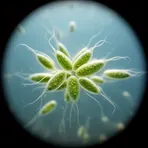
A group of mostly single-celled water organisms like algae that move using a thin tail-like part
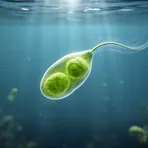
A single-celled living thing in water, often green, with a tail used to move

Small single-celled algae with a tail that live in fresh or sea water
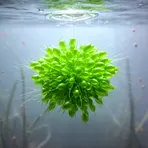
A group of bright green algae with tail-like parts that live in freshwater
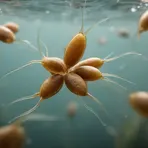
A group of algae with two unequal tails used to move and a brown colour

A group of single-celled algae with two tail-like parts that sometimes glow and cause red tides
A single-celled creature in water, some of which cause red tides
Surface Forms
Morphology
Phytomastigina = phytomastig (opaque) = phyto + mastig + ina
The term is a technical taxonomic formation built from scientific combining forms and a taxonomic suffix that is unlikely to be interpretable by an average B1 learner.
Etymology
Phytomastigina comes from the parts phyto- meaning 'plant' and mastig- meaning 'whip', which brings to mind a tiny plant with a whip-like tail. So, Phytomastigina are plant-like single-celled organisms with a whip-like tail and chlorophyll, and that is why they are often treated as a kind of tiny algae.