

Heterokontophyta
- noun
- /ˌhɛtərəˌkɒntəˈfaɪtə/
- Specialized
- Heterokontophyta are distinguished by their chloroplast pigments and the presence of unequal flagella.
Examples
-
Some scientists now classify brown algae under Heterokontophyta rather than Chrysophyta.
-
The diversity within Heterokontophyta has led to ongoing debates in algal taxonomy.
-
The Heterokontophyta group includes various types of algae.
-
Did you know that Heterokontophyta can photosynthesize?
-
Heterokontophyta are characterized by their unique flagella and chlorophyll pigments, which set them apart from other algae.
-
Researchers have found that the Heterokontophyta group plays a vital role in aquatic ecosystems.
-
Many marine species belong to Heterokontophyta, showcasing a variety of forms and adaptations.
Synonyms

A group of yellow-green algae with tiny tails of different lengths on moving cells
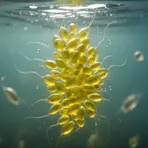
Small yellow-green algae that live mostly in fresh water and move with uneven tail-like parts

A group of mostly freshwater microscopic algae with yellow or brown color
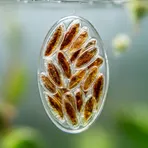
A group of mostly freshwater algae with brown or yellow colours and tiny glass shells
Surface Forms
Morphology
Heterokontophyta = heterokont (opaque) = hetero + kont + phyta
The base 'heterokont' transparently contains 'hetero-' ('different'), but the element 'kont' (flagellum) is obscure to most learners, so the base is only partly transparent.
Etymology
Heterokontophyta comes from hetero- 'different' and kont 'flagellum', with 'flagellum' meaning a tail-like part of a cell. So the name points to the key fact that these algae have two flagella of unequal length, meaning their 'tails' are different.

