
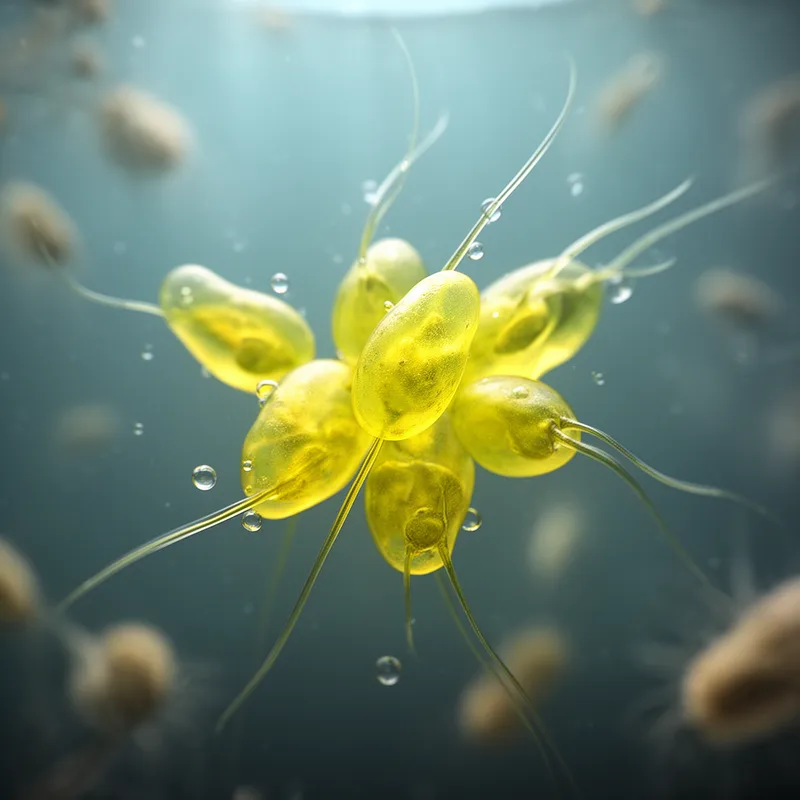
Heterokontae
- noun
- /ˌhɛtərəˈkɒnteɪ/
- Specialized
- Heterokontae are distinguished by flagella of different lengths on their motile cells.
Examples
-
Researchers studied the unique cell structure of Heterokontae in the laboratory.
-
Did you know that Heterokontae can be found in both freshwater and marine environments?
-
The pond sample contained various types of Heterokontae among other microorganisms.
-
The Heterokontae are essential for aquatic ecosystems.
-
Heterokontae are distinguished by flagella of different lengths on their motile cells.
-
Researchers studied the unique cell structure of Heterokontae in the laboratory.
-
The pond sample contained various types of Heterokontae among other microorganisms.
Synonyms

Small yellow-green algae that live mostly in fresh water and move with uneven tail-like parts
A group of algae with two unequal tails used to move and a brown colour
A class of yellow-green algae found mainly in fresh water that have a special color and cell structure
Surface Forms
Morphology
Heterokontae = Heterokonta (semi-transparent) = hetero + kont + ae
The change from 'Heterokonta' to 'Heterokontae' is a regular taxonomic/Latin pluralization and is therefore transparent.
Etymology
Heterokontae comes from the Greek parts hetero- meaning 'different' and -kont meaning 'whip-like tail' or 'flagellum'. So the name tells you their key feature: their swimming cells have two tail-like 'flagella' of different lengths, one long and one short.

