
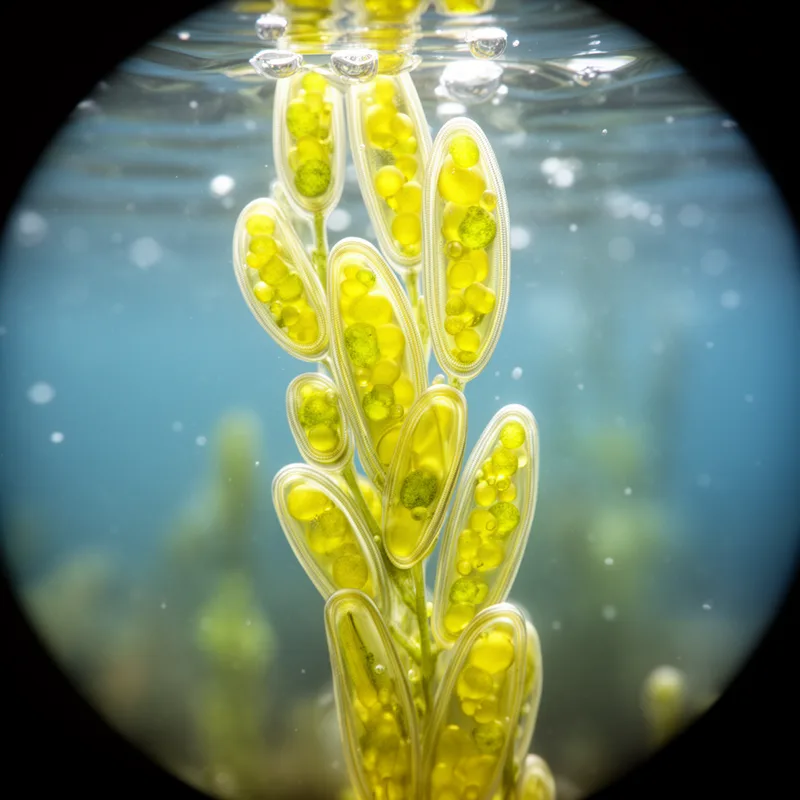
Xanthophyceae
- noun
- /ˌzænθəˈfaɪsiˌi/
- Specialized
- Members of the Xanthophyceae are characterized by the yellow-green color of their chloroplasts.
Examples
-
Unlike other algae, Xanthophyceae have distinctive cell wall compositions.
-
Scientists often study Xanthophyceae to understand pigment diversity in aquatic environments.
-
The Xanthophyceae are fascinating.
-
Look at the Xanthophyceae in the pond!
-
The study of Xanthophyceae reveals how their unique pigments contribute to freshwater ecosystems.
-
Researchers have discovered that Xanthophyceae play an important role in aquatic photosynthesis.
-
In freshwater habitats, Xanthophyceae can often be found thriving alongside other types of algae.
Synonyms
Small yellow-green algae that live mostly in fresh water and move with uneven tail-like parts

A group of yellow-green algae with tiny tails of different lengths on moving cells
Surface Forms
Morphology
Xanthophyceae = xantho + phyceae
The word is built from specialized combining forms ('xantho-' + '-phyceae') used in scientific taxonomy; these are not productive standalone English words so the meaning is not derivable by an average B1 learner.
Etymology
Xanthophyceae comes from Greek parts xantho- meaning 'yellow' and -phyceae meaning 'algae' or 'seaweed'. So it literally says 'yellow algae', which fits their yellow-green colour and helps you remember this group of freshwater algae.

