
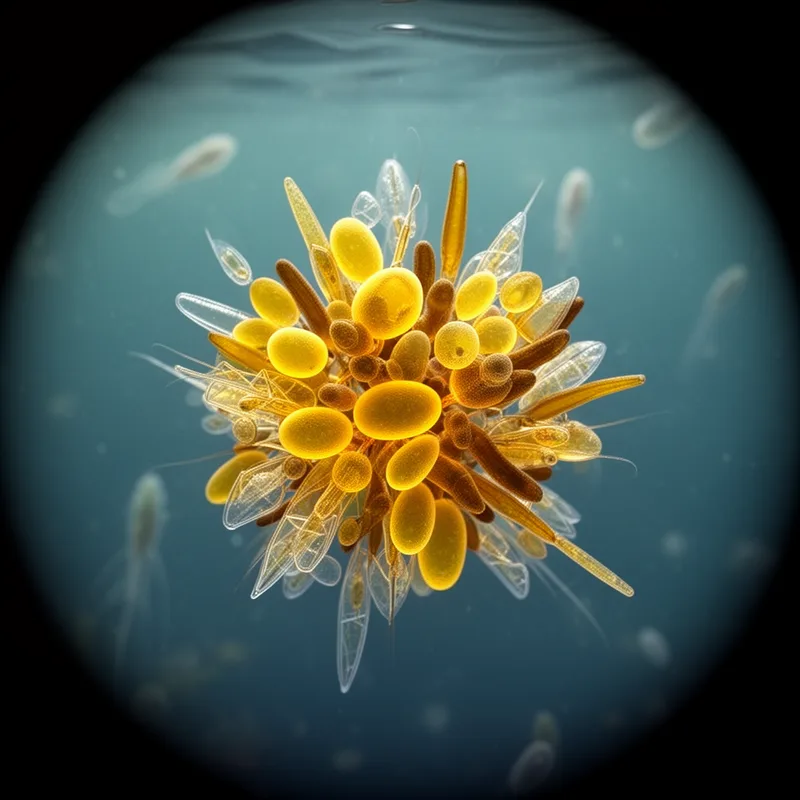
division Chrysophyta
- noun
- /dɪˈvɪʒən ˈkrɪsəˌfaɪtə/
- Archaic
- The division Chrysophyta includes both yellow-green algae and diatoms.
Examples
-
Many species within the division Chrysophyta are important components of freshwater ecosystems.
-
Scientists study the division Chrysophyta to understand the diversity of microscopic algae.
-
The division Chrysophyta includes many species of diatoms.
-
Did you know that the division Chrysophyta contains diatoms?
-
Many species within the division Chrysophyta play a crucial role in maintaining the health of freshwater ecosystems.
-
Researchers focus on the division Chrysophyta to explore the various adaptations of microscopic algae in aquatic environments.
-
The division Chrysophyta encompasses a diverse range of organisms, including both yellow-green algae and distinct diatoms.
Synonyms
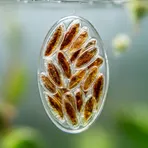
A group of mostly freshwater algae with brown or yellow colours and tiny glass shells
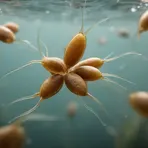
A group of algae with two unequal tails used to move and a brown colour
Surface Forms
Morphology
The phrase combines a generic taxonomic rank 'division' with the proper taxon name 'Chrysophyta', so its meaning — the taxonomic group called Chrysophyta — is directly derivable from the constituents. Although specialized scientific knowledge may be required to know details, the compositional structure is transparent and mirrors cross-linguistic taxonomic naming patterns.
Etymology
The noun division Chrysophyta comes from Greek words meaning 'gold' and 'plants': chryso- means 'gold' and -phyta means 'plants'. Many of these tiny algae have a yellow or brown color, so the name gives a clear image of a 'group of golden plants' and explains why we use it for this group of freshwater algae.

