
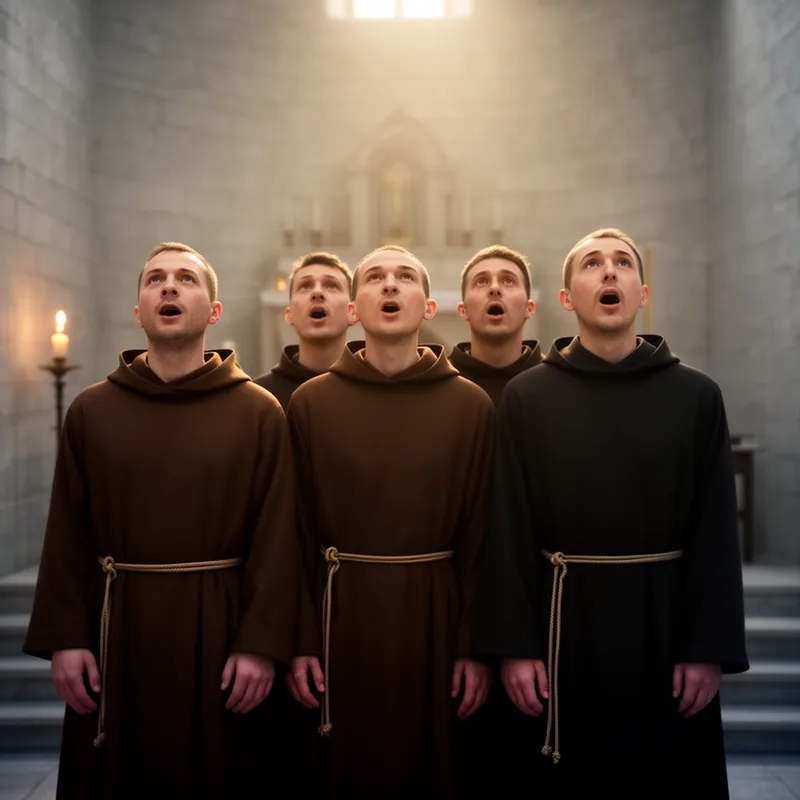
plainchant


 1
9.9
1
9.9
- noun
- /ˈpleɪnˌʧænt/
- Specialized
- Review performance practice of plainchant (continuous tempo, smooth motion, no chopped notes).
- plainchant performance
- practice of plainchant
Examples
-
Ask students to compare plainchant harmonies as practiced in the Middle Ages and classical period with this twentieth-century work.
Academic text (2003) -
During the Catholic Mass, the congregation often listens to plainchant, which features a beautiful, unaccompanied melody.
-
Write the words "composition" and "performance" on the board underneath the word "plainchant."
Academic text (2003) -
These strategies explore the performance of plainchant in compositions through various historical periods.
Academic text (2003) -
Introduce the Liber Usualis as a source for plainchant.
Academic text (2003) -
Plainchant from the Graduale Romanum will continue to be used within an otherwise vernacular mass.
Blog text (19) -
Characteristically, the cantus firmus is the plainchant tune with an elongated rhythm.
Academic text (2003) -
The choir practiced traditional plainchant for their performance at the church service last Sunday.
-
Many composers have drawn inspiration from plainchant when creating their liturgical music.
Synonyms
 2
9.5
2
9.5
A sacred song of one melody that people sing with voices and no instruments in the Catholic Church
 1
8.9
1
8.9
A simple church song sung without instruments, like Gregorian chant
How Polyphonic

Surface Forms
Morphology
Etymology
Plainchant comes from two simple parts: plain meaning 'clear' or 'simple' and chant meaning 'song'. So plainchant is a 'simple song', a single clear melody sung without instruments in church services.