

to fugue
- verb
- /fjuːɡ/
- Specialized
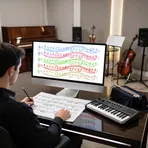
- She often fugues during practice, experimenting with different themes and harmonies in her compositions.
Examples
-
In his latest performance, he fugued beautifully, showcasing his mastery of counterpoint and melodic lines.
-
Several times since they'd gotten off the maglev shuttle, she'd fugued out on him, standing still but not rigid and looking at nothing in particular, her mouth moving but only drifting snatches of sound coming out.
Fiction book (2002) -
The composer decided to fugue a new piece for the orchestra, carefully intertwining the various melodies.
Synonyms
 1
7.9
1
7.9

To write music with several different melodies at the same time

To sing or play parts with each voice entering one after another to make a layered sound
Compounds

- Specialized

 1
9.9
1
9.9
A rare condition when a person leaves home, starts a new life, and forgets who they are
How Complex

Surface Forms
Etymology
To fugue a piece takes its name from Latin fuga 'flight' because the composer makes musical lines 'chase' the main theme one after another, so to fugue is to arrange voices that follow and weave together.