

plainsong


 1
8.9
1
8.9
- noun
- /ˈpleɪnˌsɔŋ/
- Specialized
- The leader began to chant the psalm—neither Anglican chant nor plainsong.
Examples
-
Sadly, many of our newcomers and young people have little or no experience with Anglican chant or plainsong, and I'm rather new to it myself.
Blog text (20) -
In the illustration, the singers are improvising on a plainsong.
Academic text (2003) -
I love plainsong, and have had fabulous experiences of small groups of people singing.
Blog text (33) -
The priest requested that we learn plainsong, which he had sung in the seminary.
Academic text (1992) -
Tired of staring into the cold blue eye of distance, they turn back to the plainsong of the grass that their first bodies knew, relearning the horizontal: the snake's-eye view of history.
Fiction book (1991) -
"Forty-five years old at the time, she had permitted herself to be distracted by this descant of gallantry from the plainsong of doubt that was its theme.
Fiction book (1994) -
Accidentals are limited to F, G, C-sharp, B, and E-flat, found in plainsongs and related to Gregorian modes.
Academic text (2018) -
The choir performed beautiful plainsong during the evening mass.
-
Many people find peace in the serene melodies of plainsong.
-
In her studies, she focused on the evolution of plainsong in the Catholic tradition.
Synonyms
 2
9.5
2
9.5
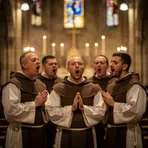
A sacred song of one melody that people sing with voices and no instruments in the Catholic Church
 1
9.9
1
9.9
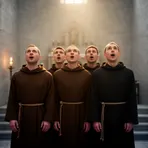
A church song with one simple tune that people sing without instruments
Surface Forms
Morphology
Etymology
Plainsong is simply plain + song, and plain here means 'simple' or 'clear'. So plainsong refers to a single, unaccompanied church chant (like Gregorian chant) where the music is pure and not decorated by instruments.