

parietal
 1
8.8
1
8.8

- noun
- /pəˈraɪətl/
- Specialized
- The doctor explained that the parietal bones play a crucial role in protecting the brain.
Examples
-
That's the junction of the temporal lobe, which is the one that lays this way, and the parietal lobe, which lays this way.
-
Bilateral parietal top back part of your brain decreases.
-
And here they've taken different levels and they go down through this area of the parietal lobe and they see these barrels.
-
Forward there is the frontal lobe, easy to remember this part in front, the parietal lobe, the occipital lobe, and the temporal lobe.
-
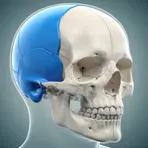
The parietal bones form the sides and roof of the skull in humans.
-
In a skull fracture, the parietal area is often the most affected due to its location.
Synonyms
 2
7.4
2
7.4
One of two bones on the top and side of the skull between the front and back bones
Compounds
- Specialized
6
7.0
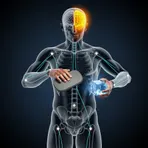
A part of the brain that helps you feel touch and temperature and know where your body is
- Specialized
2
7.4
One of two bones on the top and side of the skull between the front and back bones

- Specialized
A part of the brain near the top that processes touch and tells you where things are

- Specialized
A raised fold on the parietal lobe of the brain that helps sense touch and space

- Specialized
A tough outer layer around the heart attached to the diaphragm and breastbone

- Specialized
Seeds grow on the inner wall of a flower's ovary, not on the central axis

- Specialized
A thin layer of tissue that lines the inside of the chest and covers the muscle under the lungs
Surface Forms
Morphology
parietal = parietal (opaque) = pariet + al
The noun is historically related to the adjective 'parietal', but the learned Latin stem is not transparent to most B1 learners.
Etymology
Parietal comes from the Latin root paries meaning 'wall', so a parietal bone is literally a 'wall' piece that makes the sides and roof of the skull to protect the brain.