
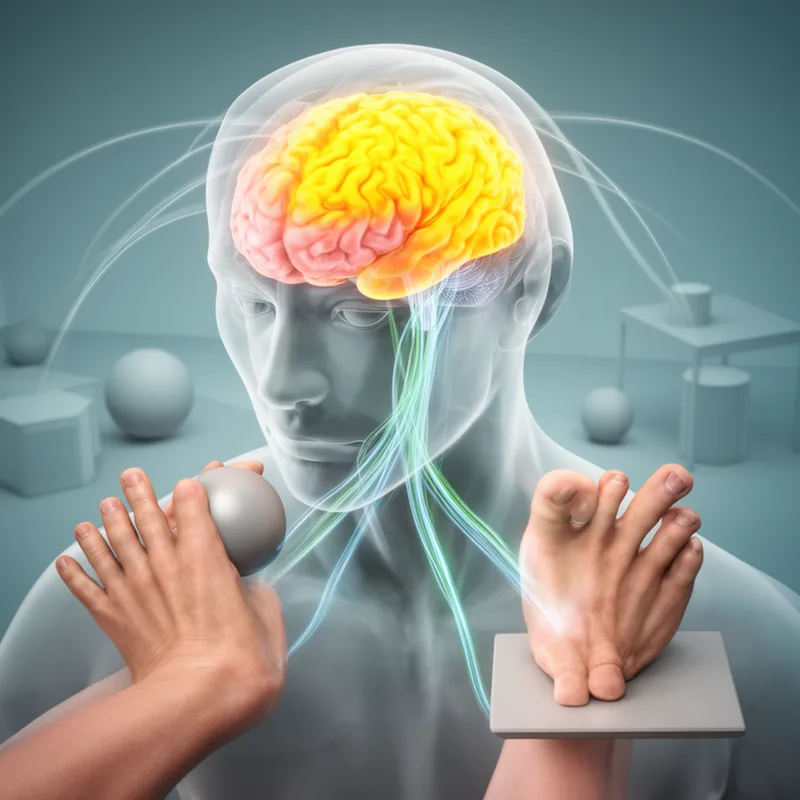
parietal cortex
- noun
- /pəˈraɪətəl ˈkɔrtɛks/
- Specialized
- The parietal cortex interacts with frontal regions (i.e., BAs 6, 9, 10, 45-47), which serve to hypothesis test various solutions to a given problem.
- posterior parietal cortex
Examples
-
The perception of these two stimulus attributes appears to depend on the integrity of the inferior temporal and the parietal cortex, respectively.
Academic text (1997) -
The brain injury Jane suffered lit up her frontal and parietal cortex.
-
Higher proficiency in a second language, as well as earlier acquisition of that language, correlates with higher gray matter volume in the left inferior parietal cortex. 18
Blog text (22) -
So far, the highest correlation is between NFTs in the inferior parietal cortex and performance on the Blessed test (r = -0.98).
Academic text (1995) -
Perception of environmental cues involves, beyond primary sensory cortices, various structures in the posterior parietal cortex (Kravitz et al., 2011).
Academic text (2017) -
The parietal cortex processes sensory information from various parts of the body.
-
Damage to the parietal cortex can affect a person's spatial awareness and navigation.
-
Recent studies highlight the importance of the parietal cortex in integrating sensory data to form a cohesive perception of the environment.
Synonyms
 6
7.0
6
7.0

A part of the brain that helps you feel touch and temperature and know where your body is
Surface Forms
Morphology
The phrase is a straightforward composition of 'parietal' (relating to the parietal region of the head/brain) and 'cortex' (the grey-matter layer of the brain), so its meaning as the cortical area in the parietal region follows directly from the constituents. This anatomical naming pattern is regular and cross-linguistically comparable, so a learner who knows both words can infer the MWE's meaning.
Etymology
Parietal cortex comes from old words: parietal from a word for 'wall' and cortex meaning 'outer layer'. Think of an 'outer layer' along the side of the head under the crown; it sits there and helps you feel touch and know where things are, so the name matches its job of sensing and knowing where things are.